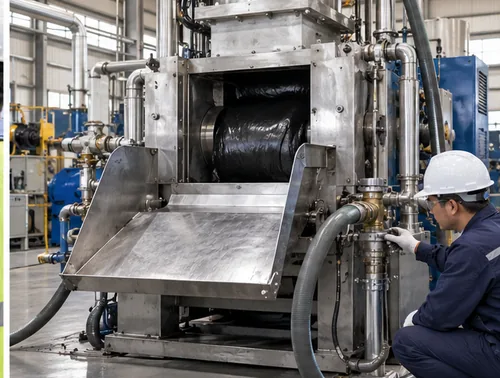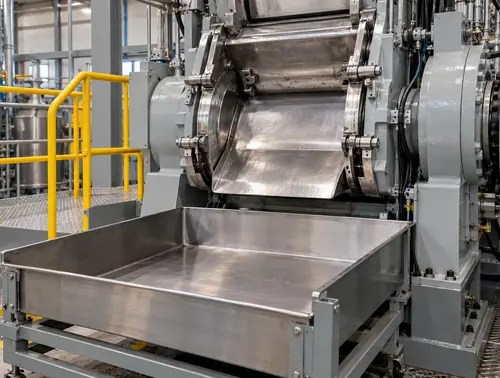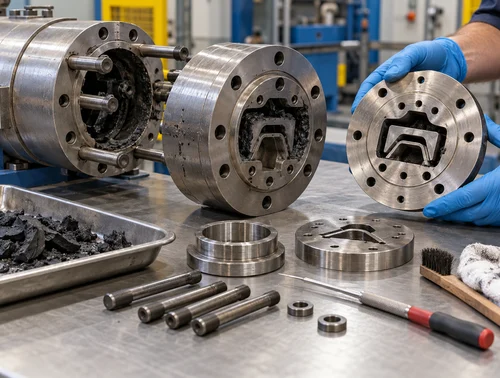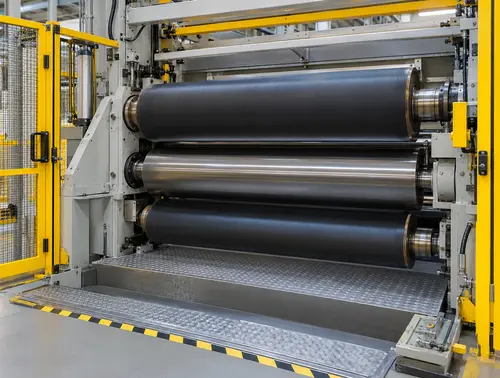


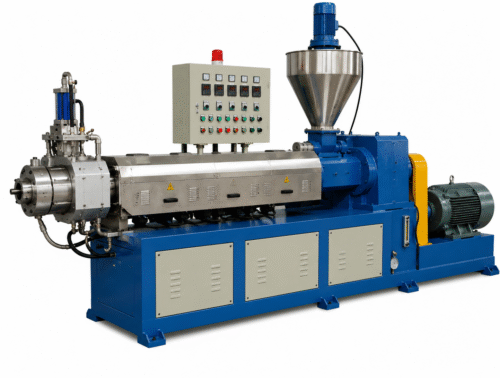
 Rubber Hot Feed Extruder
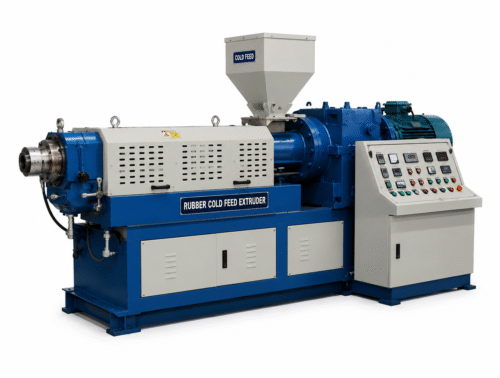 Rubber Cold Feed Extruder
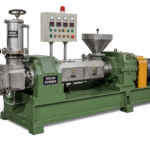 Rubber Strainer – Reclaim Extruder
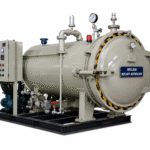 Reclaim Rotary Autoclave
 Compression Molding
 Injection Molding
 Vacuum Molding
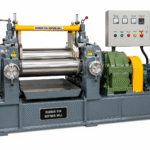 Rubber EVA Refiner Mill
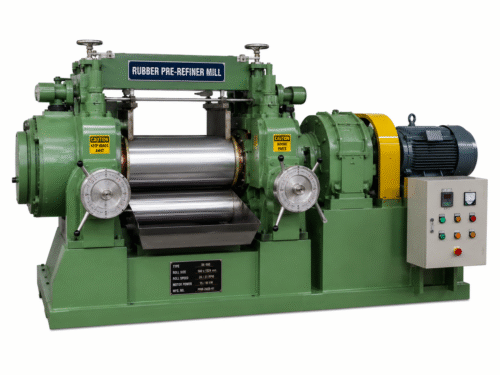 Rubber Pre-Refiner Mill
 Tire Building Machine
 Tread & sidewall Extruder
 Tread Cooling skiver
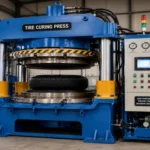 Tire curing press
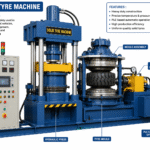

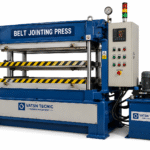 BELT JOINTING PRESS
 Belt Building Machine

 Eva Footwear Injection Molding Machines
 Hawaii Slipper Sole Sheet Machine
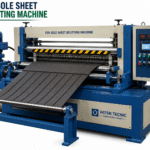 Eva Sole Sheet Splitting
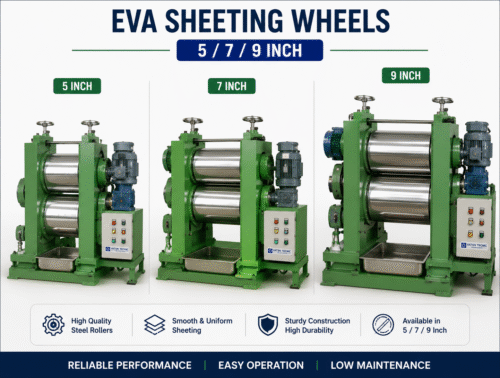 Eva Sheeting Wheels 5/7/9
 PVC Flooring Machine
 Plastic Pelletizing Line
 Filler / Masterbatch / PVC / TPR / EVA

 Breaker – Cracker Mill
 Shredder – Rasper Machines
 Waste Rubber Crumb Grinder Mill
Compare Rubber Mixing Mill in Qingdao: Set the Friction Ratio Correctly

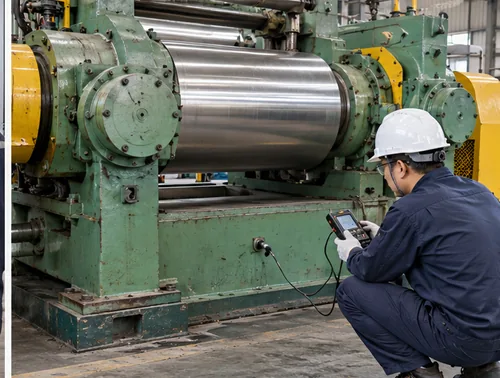
Quick answer: A rubber mixing mill in Qingdao is set by its friction ratio, not by its motor size. The ratio between the two roll speeds decides how much shear the compound sees, and a mill running the wrong ratio will either mix too slowly or overheat the stock.
Friction ratio is the least discussed setting on a two-roll mill and one of the most consequential. Buyers comparing machines from rubber mixing mill in Qingdao suppliers often focus on roll diameter and drive power, then discover that the ratio does not suit their compound. Changing it means changing gears, which is a project rather than an adjustment.
This guide explains what the ratio does, how to check it before purchase, and when a different ratio is worth the cost.
What friction ratio does
One roll turns faster than the other. The difference creates a shearing action as the compound passes through the gap. A higher ratio gives more shear and faster dispersion, but it also generates more heat. A lower ratio is gentler, which suits heat-sensitive compounds but mixes more slowly.
The ratio is fixed by the gearbox or by change gears. Some mills allow a limited change; most do not. That is why the ratio has to be right at purchase.
Reading the specification
Ask for the roll speeds at both rolls, not just the ratio. A ratio quoted without the driving speed tells you little, because the same ratio at a different speed gives different shear. Then confirm the method used to measure — surface speed is what matters, not shaft speed.
Matching ratio to compound
| Ratio band | Behaviour | Suits | Risk |
|---|---|---|---|
| Low friction | Gentle shear, slower dispersion | Heat-sensitive, soft compounds | Long cycles, poor dispersion |
| Standard friction | Balanced shear and temperature | General rubber compounding | Compromise on both extremes |
| High friction | Fast dispersion, high heat | Hard, highly filled compounds | Scorch risk, cooling demand |
Checking a used mill before purchase
Ask for the gearbox ratio and the motor speed, then calculate the roll speeds yourself. Compare the result with what the seller claims. Discrepancies usually mean a gearbox was replaced or the mill was rebuilt with different parts.
Then run the mill if power is available. Watch the band form on the front roll and note how quickly the compound softens. A mill that takes a long time to form a band may be running too little friction for the compound, or the rolls may be too cool.

What changes if the ratio is wrong
| Symptom | Likely cause | Options |
|---|---|---|
| Slow band formation | Ratio too low for the compound | Change gears if possible, or accept longer cycles |
| Stock scorching at the nip | Ratio too high, cooling insufficient | Reduce speed, improve cooling |
| Uneven dispersion | Ratio or gap inconsistent | Check gap repeatability and roll condition |
| Drive overload | Ratio or compound mismatch | Re-evaluate the drive against the batch |
Cooling, because friction makes heat
More friction means more heat, and the cooling circuit has to remove it. Confirm the roll cooling arrangement and the water temperature available at your plant. A mill sold into a temperate climate may need a larger cooling capacity in a hotter plant.
Ask whether the rolls are drilled or peripherally bored, and whether the rotary unions are serviceable. These details decide how evenly the roll surface is cooled, which in turn affects how consistently the band forms.
Buying from an overseas supplier
Confirm the drawing set includes the gearbox ratio and roll speeds. Ask for the mill’s commissioning record if it exists. For a used machine, check that the gearbox oil is clean and the coupling is aligned; a misaligned drive changes the effective speed and loads the bearings.
Our notes on journal and bearing evidence and roll gap repeatability cover the checks that go with the ratio.
What the ratio means for planning
Once you know the ratio and the roll speeds, you can estimate how long a batch will take and how much heat it will generate. That lets you plan cooling capacity and shift patterns before the mill arrives, rather than discovering the mismatch in the first week.
Write the measured ratio and roll speeds into the machine record at commissioning. It is the figure every future compound decision depends on, and it is quickly forgotten.
Comparing mills? Vatsn Tecnic supplies new, used and refurbished rubber processing machinery. Tell us your compound type and the dispersion you need, and we will help you check whether a mill’s friction ratio suits the work.
To read More about Rubber Making Machine Visit Here:
https://www.indiamart.com/vatsntecnic/profile.html

Frequently asked questions
What is a normal friction ratio?
It varies by design and compound. Ask for the roll surface speeds and compare them with the compound you intend to run, rather than assuming a standard figure applies.
Can I change the ratio on a used mill?
Sometimes, with change gears or a different gearbox. Confirm before purchase, because it is a significant cost and may not be feasible on every design.
Does a higher ratio always mix faster?
It disperses faster but generates more heat, which can force shorter cycles or cause scorch. The best ratio balances dispersion against temperature rise.
How do I measure roll speed?
Measure surface speed with a tachometer on each roll, or calculate it from the motor speed and gearbox ratio. Shaft speed alone is not enough.
Why does the band form slowly?
Low friction, cold rolls or a compound that is too stiff. Check the ratio, the cooling and the compound temperature in that order.
Is a bigger mill always better?
No. A mill larger than your batch size needs runs inefficiently and consumes more power. Match the mill to the batch.
What about safety at the nip?
Confirm guards, emergency stops and the brake work before running. Friction ratio discussions are irrelevant if the nip is unguarded.
What documentation should I request?
Gearbox ratio, roll speeds, roll diameter, cooling requirements and the foundation drawing. These are the figures that decide whether the mill suits your plant.