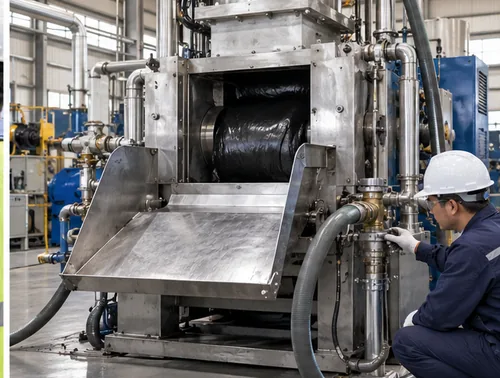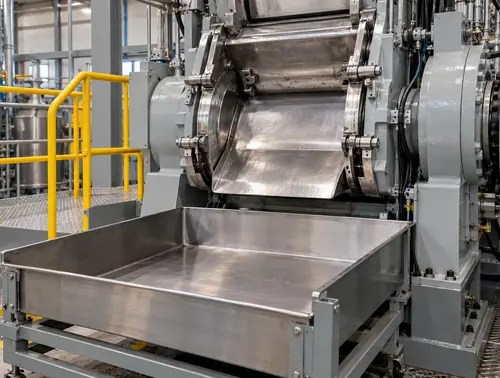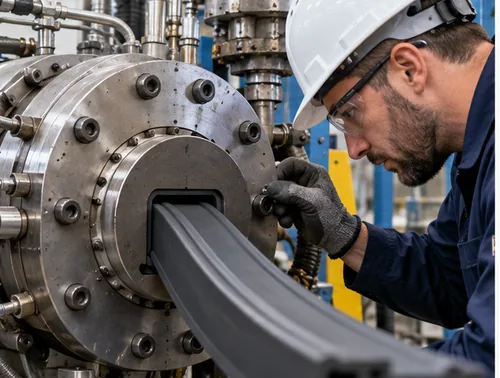
 Rubber Hot Feed Extruder
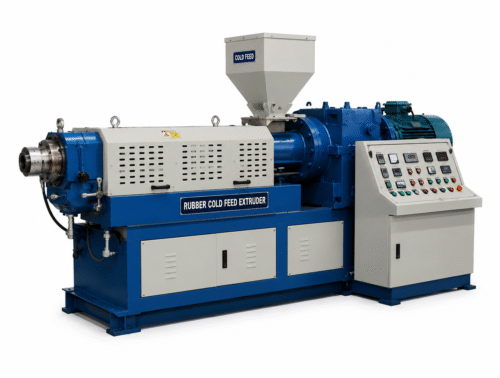 Rubber Cold Feed Extruder
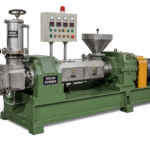 Rubber Strainer – Reclaim Extruder
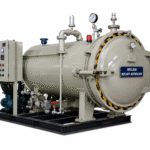 Reclaim Rotary Autoclave
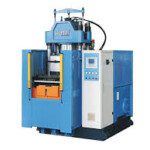 Compression Molding
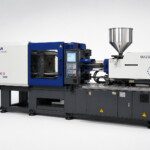 Injection Molding
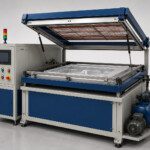 Vacuum Molding
 Rubber EVA Refiner Mill
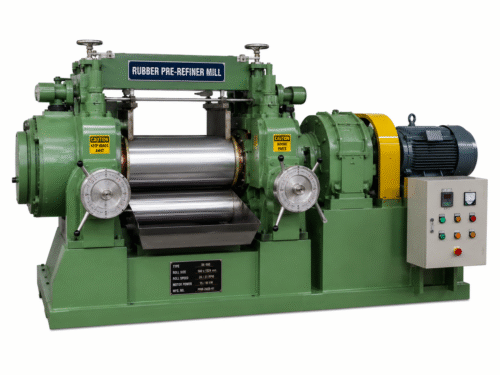 Rubber Pre-Refiner Mill
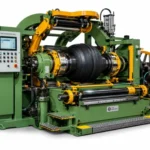
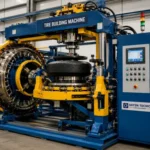 Tire Building Machine
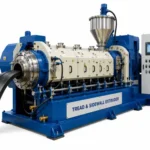 Tread & sidewall Extruder
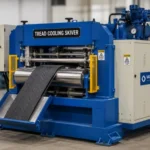 Tread Cooling skiver
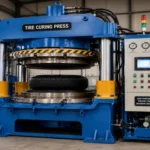 Tire curing press
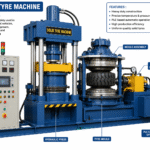
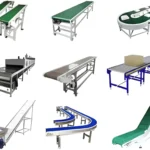
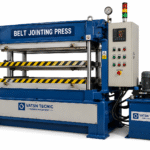 BELT JOINTING PRESS
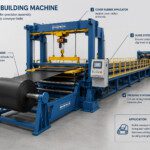 Belt Building Machine
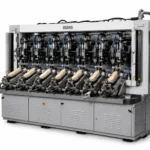
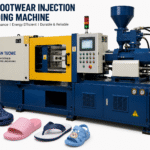 Eva Footwear Injection Molding Machines
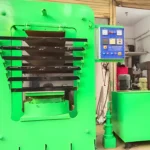 Hawaii Slipper Sole Sheet Machine
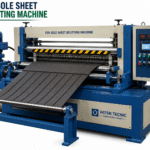 Eva Sole Sheet Splitting
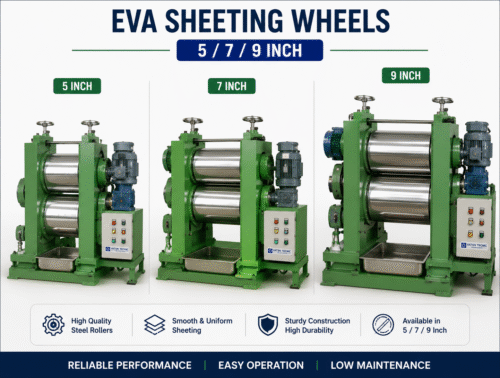 Eva Sheeting Wheels 5/7/9
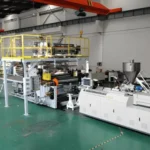 PVC Flooring Machine
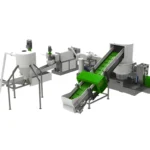 Plastic Pelletizing Line
 Filler / Masterbatch / PVC / TPR / EVA
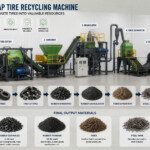
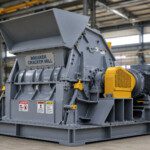 Breaker – Cracker Mill
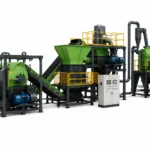 Shredder – Rasper Machines
 Waste Rubber Crumb Grinder Mill
Buy Rubber Extruder Machine in Bhubaneswar: Match the Die to Your Profile

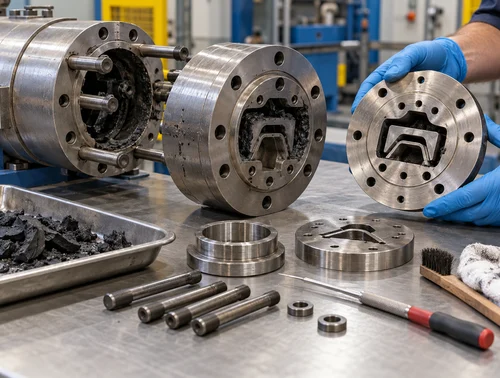
Quick answer: A rubber extruder machine in Bhubaneswar is only as good as the die it runs. Before you buy, confirm the die is matched to your profile, that spare dies are available, and that the head opens easily enough for cleaning between compounds.
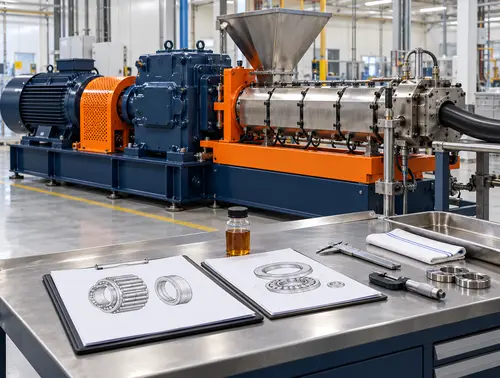
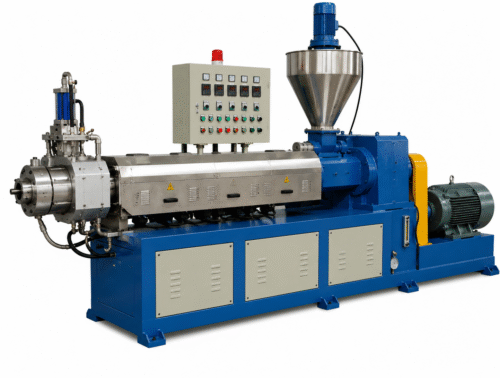
Buyers spend weeks comparing screws and motors, then accept whatever die comes with the machine. In practice the die decides whether the profile meets tolerance, how often the line stops for cleaning, and how much scrap you generate in the first month. A rubber extruder machine in Bhubaneswar should be selected around the product, not the other way round.
This guide covers die matching, the evidence to ask for, and the checks that prevent a commissioning surprise.
Start from the profile, not the machine
Every profile has a target cross-section, a tolerance and a surface requirement. The die has to deliver all three at your production rate, and the extruder has to supply compound at a stable pressure and temperature. If either half is wrong, the other cannot compensate.
Die matching
Ask the seller which profiles the machine has run and request a sample of the actual output, not a catalogue photograph. A die that produced a simple rectangular strip may not produce a complex section with thin walls, because the flow balance across the die is different.
Spares and changeover
Confirm how many dies come with the machine, whether the die plates are standard, and how long a changeover takes. A machine with one die and no drawings is a machine you will re-engineer before you can add a second product.
Inspection evidence that matters
| Item | What to check | Why it matters |
|---|---|---|
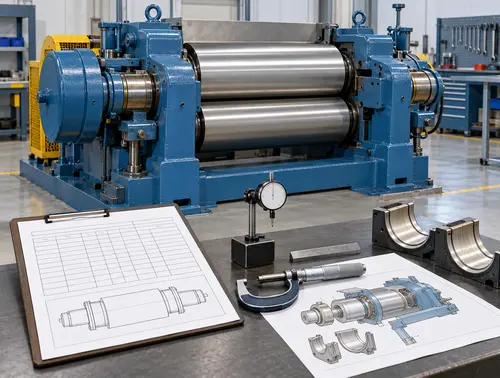
| Screw and barrel | Measured clearance against drawing | Decides output stability and stock temperature |
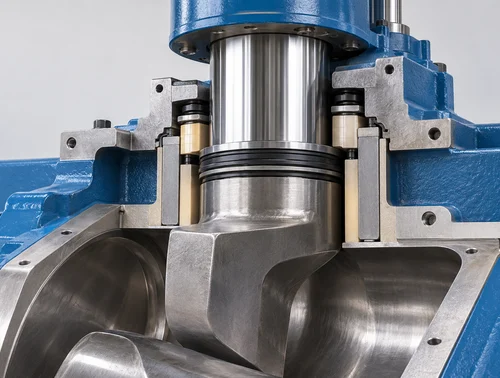
| Die and head | Sealing faces, flow paths, bolt condition | Leaks and dead spots cause scorch and scrap |
| Temperature zones | Each zone heats and holds setpoint | Profile dimensions drift when zones are uneven |
| Take-off and cooling | Haul-off speed range, cooling trough length | Determines achievable line speed and sag control |
| Strainer | Screen size, changer operation | Contamination control without stopping the line |
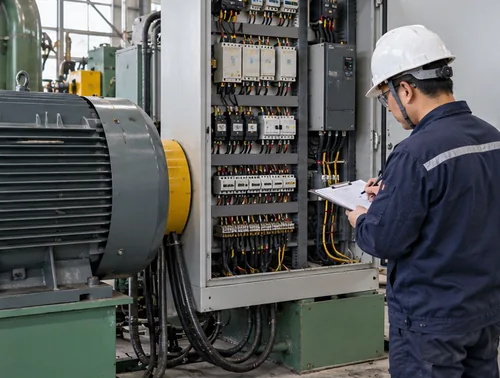
| Electricals | Voltage, panel documentation, spares | Rewiring is the most underestimated cost |
Comparing a dedicated line with a general-purpose extruder
| Option | Strength | Limitation | Best fit |
|---|---|---|---|
| Dedicated profile line | Die and take-off matched from day one | Less flexible if the product changes | One or two high-volume profiles |
| General-purpose extruder | Cheaper, adaptable with new dies | Every new profile needs die development | Job work and varied sections |
Site and utilities in Odisha
Confirm the connected load and starting method before the machine arrives, and check that the cooling water supply is adequate for the trough and the barrel zones. Extrusion is a continuous process, so a water interruption stops production rather than slowing it.
Also plan the floor layout around the take-off: the distance from die to haul-off affects sag on soft compounds, and a layout that is too short cannot be fixed by adjustment. Leave room for a conveyor or a second cooling section if you expect to add profiles later.
Plan the compound path as well. Feeding a strip of warm compound from a mill to the extruder requires a conveyor that keeps the stock at a consistent temperature; a cold strip produces surge and dimensional variation that no die adjustment can remove. If the extruder will run alongside an existing mixing line, check that the distance and the handling method match the output rate, and confirm who supplies the feed conveyor.
What to settle in the purchase agreement
List the dies supplied, the profiles they are intended for, and who owns the die drawings. If the seller developed the die, ask for the drawing and the flow analysis; without them, reproducing the die later is guesswork. Confirm commissioning support and the spare parts list.
Our notes on filtration screen scope and temperature zone control cover two of the checks that most often get missed.
Keep the die handling tools with the machine as well. A die that is levered out with a screwdriver is a die that will be damaged; the correct extraction tool costs little and prevents burrs that show up as marks on every profile it produces.
Planning an extrusion line? Vatsn Tecnic supplies new, used and refurbished rubber processing machinery. Share your profile drawing and target output, and ask which machine and die combination fits before you commit.
To read More about Rubber Making Machine Visit Here:
https://www.indiamart.com/vatsntecnic/profile.html
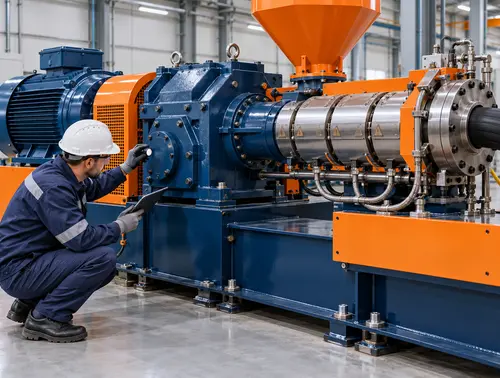
Frequently asked questions
Does the die come with the machine?
Sometimes, sometimes not. Confirm in writing which dies are included, which profiles they suit, and whether the drawings are handed over. A machine without die drawings limits you to the products the seller already ran.
How do I check die quality before buying?
Ask for a sample of the actual extruded profile and measure it against the drawing. Look for dimensional drift along the length and surface marks that indicate a damaged or poorly polished flow path.
Can I run a different profile on the same extruder?
Usually yes, with a new die and possibly a different screw configuration. The extruder capacity sets the output range; the die sets the shape. Confirm both before assuming a new product is feasible.
What tolerance should I expect?
It depends on the profile, the compound and the take-off control. Ask what tolerance the machine achieved on the sample you were shown, and verify it yourself rather than accepting a catalogue figure.
How important is the strainer?
Important if your compound carries contamination risk. A screen changer lets you filter without stopping the line; without one, contamination reaches the die and causes scrap and downtime.
What utilities does an extrusion line need?
Power sized for the drive and heaters, cooling water for the barrel and trough, and compressed air for the head and take-off. Confirm each capacity before installation.
How long does commissioning take?
Allow time for mechanical installation, temperature tuning and die trials. The die trial is usually the longest part, because profile dimensions are adjusted by trial rather than calculation.
What spares should I keep?
Heater bands, thermocouples, screens, seals and a spare die for your main profile. These are cheap and prevent a minor failure from stopping the line for days.