

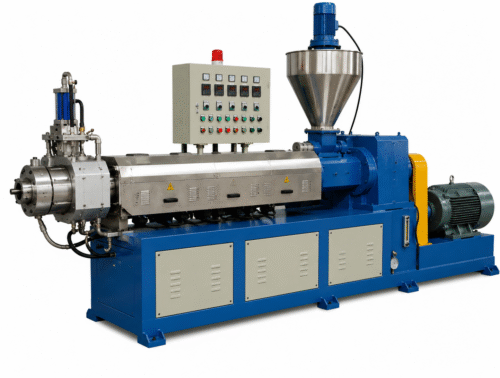
 Rubber Hot Feed Extruder
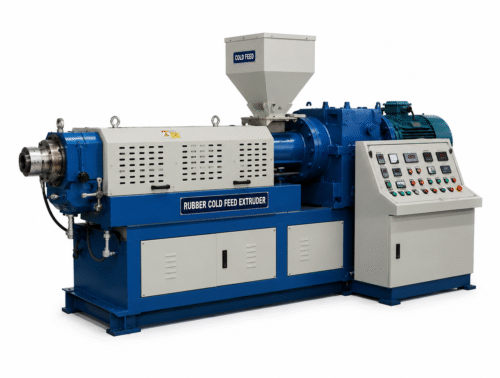 Rubber Cold Feed Extruder
 Rubber Strainer – Reclaim Extruder
 Reclaim Rotary Autoclave
 Compression Molding
 Injection Molding
 Vacuum Molding
 Rubber EVA Refiner Mill
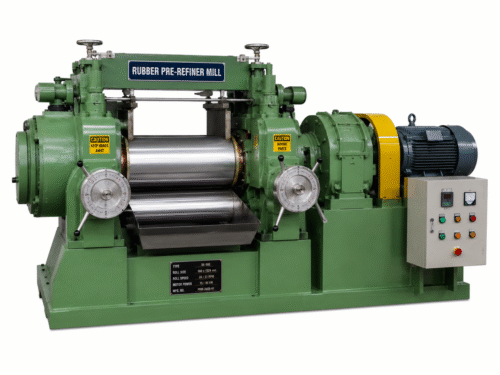 Rubber Pre-Refiner Mill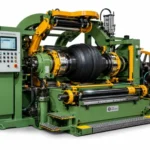
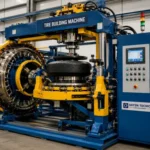 Tire Building Machine
 Tread & sidewall Extruder
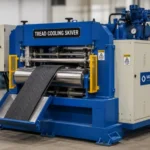 Tread Cooling skiver
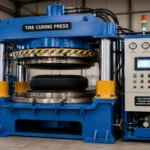 Tire curing press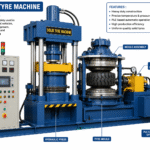
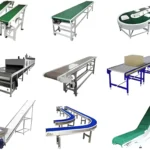
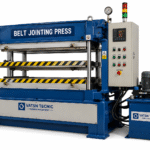 BELT JOINTING PRESS
 Belt Building Machine
 Eva Footwear Injection Molding Machines
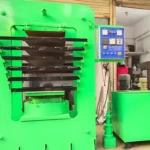 Hawaii Slipper Sole Sheet Machine
 Eva Sole Sheet Splitting
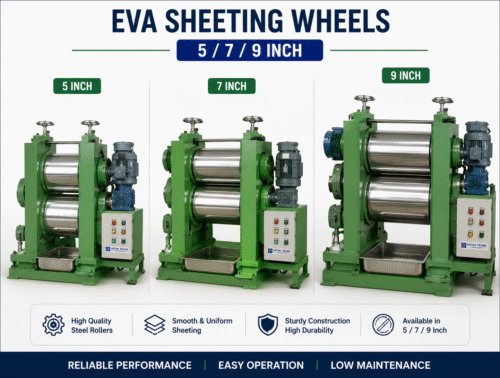 Eva Sheeting Wheels 5/7/9
 PVC Flooring Machine
 Plastic Pelletizing Line
 Filler / Masterbatch / PVC / TPR / EVA
 Breaker – Cracker Mill
 Shredder – Rasper Machines
 Waste Rubber Crumb Grinder Mill
Used Rubber Mixing Mill in Chennai: Verify Roll-Gap Adjustment Repeatability

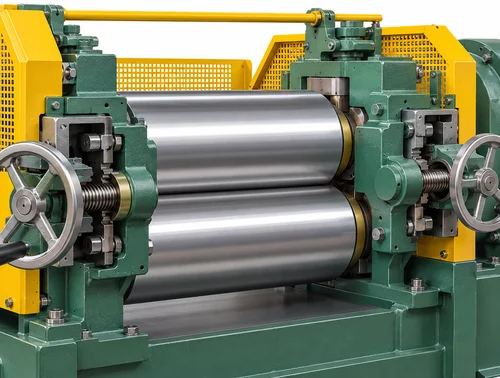
A used rubber mixing mill in Chennai should have its roll-gap adjustment assessed using an agreed measurement method and repeatable observations. A handwheel position alone does not prove the actual gap or consistent return to a setting. Ask a competent technician to identify the adjustment mechanism, measurement approach and unresolved movement issues before acceptance.
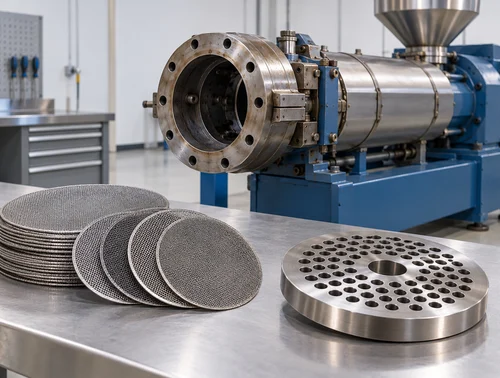
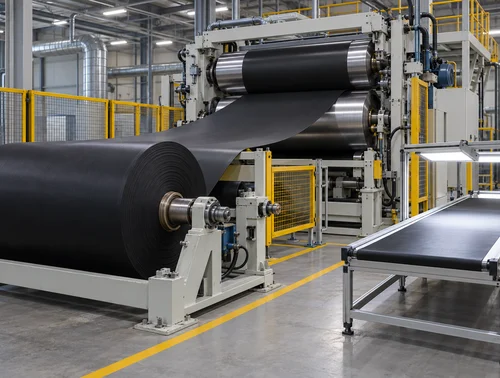
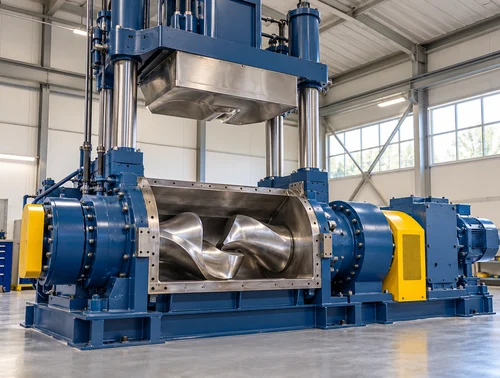
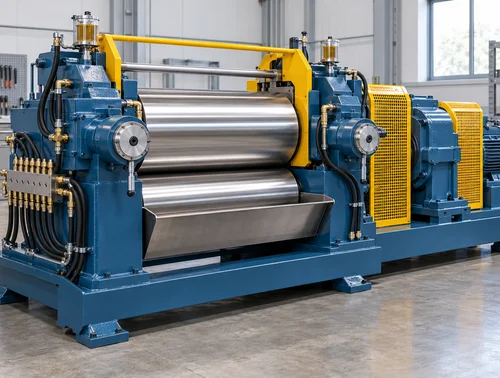
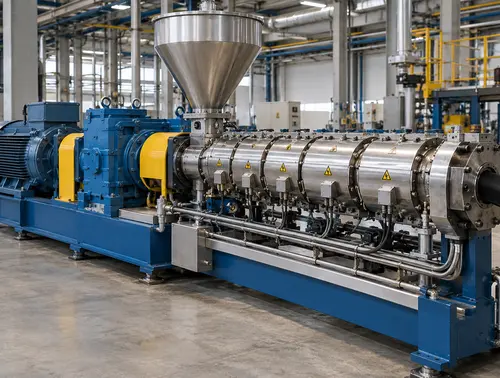
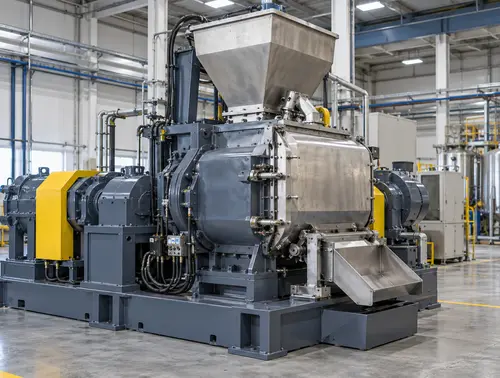
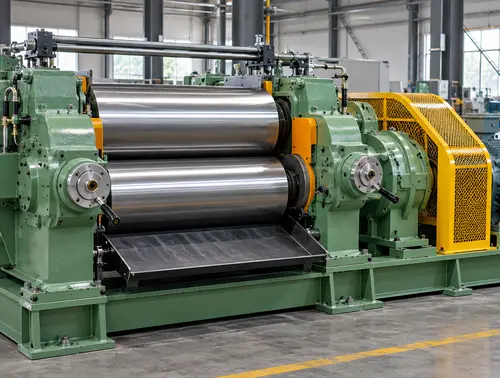
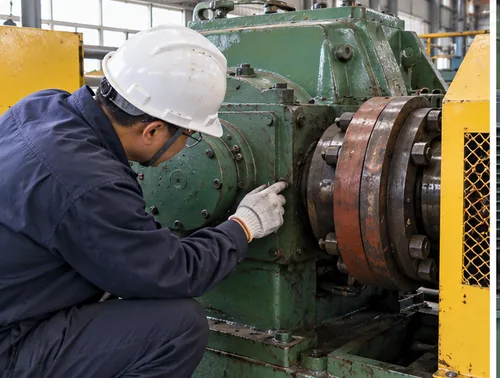
Images are generated illustrations of inspection themes. They do not show a specific machine offered for sale or prove its condition, configuration or availability.
Define the adjustment question precisely
The roll gap is the separation relevant to the mill’s working arrangement. Adjustment mechanisms and indicators vary, so the buyer must identify the offered machine’s design before comparing claims. This inspection asks whether the adjustment can be understood, measured appropriately and returned to an agreed condition under a controlled procedure.
It is separate from checking roll surface condition, drive-train health or process suitability. A mill may need evidence for each of those decisions. Keeping the adjustment question distinct prevents a general running demonstration from being treated as proof of every mechanical feature.
Measure a Used Rubber Mixing Mill in Chennai under an agreed procedure
Ask the technician to propose a method suitable for the machine and the question being assessed. The plan should identify measurement locations, instruments, machine condition and the safe procedure for obtaining observations. Do not prescribe a tool or insert a gauge near moving rolls based on a general article.
Where an instrument is used, request its relevant identification and calibration information when required by the acceptance plan. A digital display can be convenient, but its number must be related to the actual measurement question. Document limitations rather than presenting an unverified indication as a precise result.
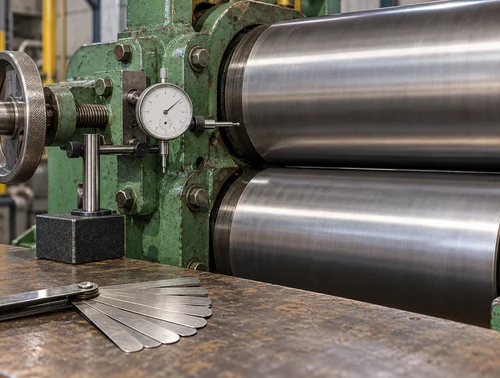
Compare indicators with measured evidence
The first table separates useful setting aids from acceptance evidence. None should be dismissed automatically, but each needs a clear role in the inspection.
| Evidence | Useful advantage | Limitation |
|---|---|---|
| Handwheel or setting mark | Supports operator reference | Does not alone establish actual gap |
| Display reading | Makes an indication easy to record | Needs relation to the measurement method |
| Agreed measurement record | Documents inspected conditions | Applies within its stated method and scope |
Observe repeatability without inventing tolerances
For a used rubber mixing mill in Chennai, agree how repeated observations will be made and recorded. The responsible technical team should choose the sequence, approach conditions and number of observations appropriate to the assessment. Record the results rather than assuming that a repeated handle position produces the same mechanical condition.
Acceptance tolerances must come from the buyer’s requirements, machine documentation or a documented engineering agreement. This guide supplies no universal acceptable backlash, gap difference or wear limit. If the parties cannot agree what a result means, keep the issue open instead of inventing a pass criterion after the inspection.
Distinguish lost movement from a confirmed diagnosis
Backlash or lost movement describes movement in an adjustment system that may not immediately produce the intended response. An observation of delayed response can prompt investigation, but it does not identify which component is responsible. Ask a competent assessor to examine the actual mechanism before specifying repairs.
Record whether an adjustment concern is observed on one side, both sides or only under a particular condition, where the procedure permits that distinction. Keep the inspection notes factual. A buyer’s video can support discussion, but it should not become a confident remote diagnosis of bearings, screws or other components.
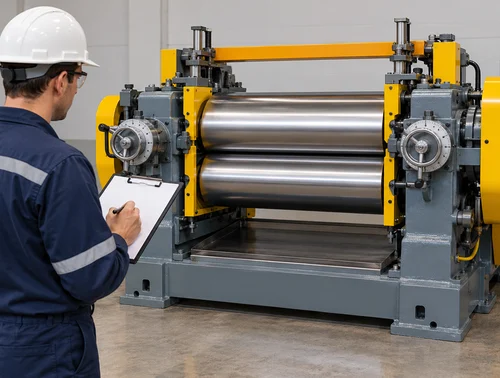
Connect adjustment evidence with the application
The buyer’s intended process determines why setting control matters. Explain the application and the evidence needed to judge suitability without assuming the mill guarantees a particular sheet result. Material behaviour and the operating procedure also influence the outcome; adjustment inspection cannot replace an application trial.
Use the mechanical observations to define the next step. A repeatable indication with unresolved measurement validity needs a different response from an identified mechanical defect. In both cases, specify what further evidence is required and who supplies it. This makes the commercial decision easier to review.
| Handover item | Practical value | Trade-off if missing |
|---|---|---|
| Mechanism identification | Supports correct maintenance | Replacement decisions become uncertain |
| Measurement procedure | Allows consistent review | Results may be difficult to compare |
| Repeatability observations | Shows behaviour under agreed conditions | A single setting can conceal variability |
| Corrective-work record | Links repair to verification | Condition claim remains unsupported |
Include corrective work in the purchase scope
When considering a used rubber mixing mill in Chennai, ask for an itemised adjustment-system finding and a written work list. If repair is proposed, clarify affected components, verification and document updates. Do not infer that refurbishment includes the entire adjustment assembly.
Assign responsibility for checks deferred until installation. Transport and reassembly can create a need to verify the delivered arrangement, but that receiving check should not erase unresolved pre-purchase findings. Preserve both records and agree how differences will be investigated before routine use.
Retain a usable handover record
The second table gives a compact document checklist. Store identified photographs, measurement notes and agreed exclusions together so the receiving team can see how the buying decision was made.
Read the roll-alignment evidence guide for a different rolling-machine question and the mill drive-train guide for related mechanical inspection. Do not transfer another machine’s limits to this mill.
Reference and next action
The HSE machinery maintenance guidance provides general planning and isolation principles. The actual machine procedure and applicable local requirements govern the inspection; the reference does not certify a used mill.
Send Vatsn Tecnic your application, adjustment concerns and required acceptance evidence. Ask for the offered machine configuration, available measurement records and a defined inspection scope. Confirm availability and included corrective work for the specific offer before closing the buying decision.
To read More about Rubber Making Machine Visit Here:
https://www.indiamart.com/vatsntecnic/profile.html
Buyer FAQs
Does the handwheel scale show the exact roll gap?
Do not assume so. Establish how its indication relates to the agreed measurement method on the offered mill.
Can I check the gap while rolls are moving?
Do not improvise. A competent technician must use a machine-specific safe procedure for any measurement.
What is an acceptable backlash value?
Use documented machine or application requirements and an engineering agreement; no universal value is asserted here.
Does repeated handle positioning prove repeatability?
It is an observation, but the actual condition needs an appropriate measurement and defined procedure.
Can a short video identify the worn component?
It may show behaviour, but diagnosis requires competent assessment of the actual mechanism.
Should the adjustment be checked after delivery?
Agree receiving and commissioning checks appropriate to transport and reassembly, while preserving pre-purchase findings.
Does mechanical adjustment evidence guarantee sheet quality?
No. Material and process conditions require their own application-trial evidence.
What should I request from Vatsn Tecnic?
Ask for the actual adjustment configuration, available records, inspection method and itemised corrective-work scope.