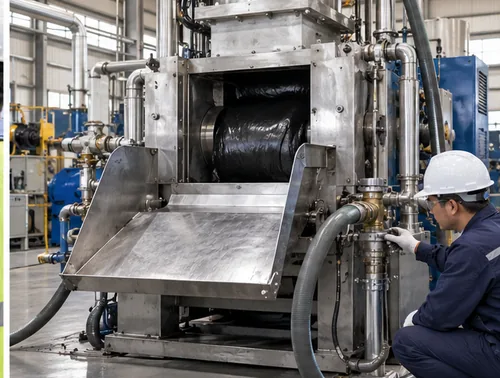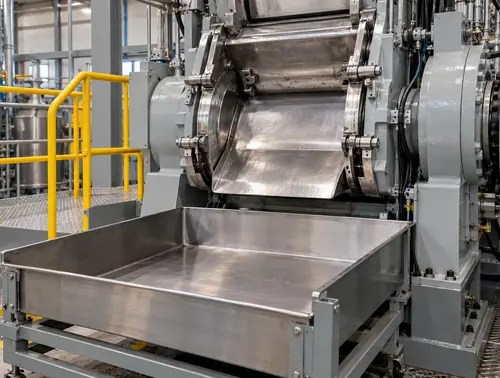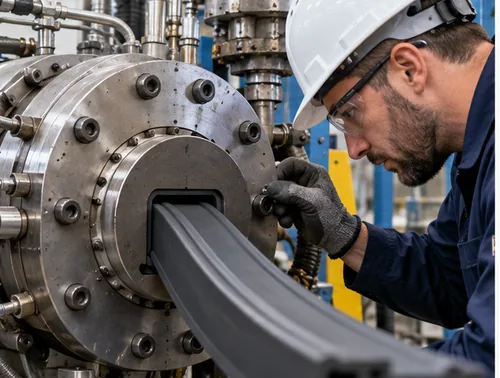
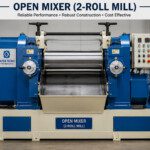
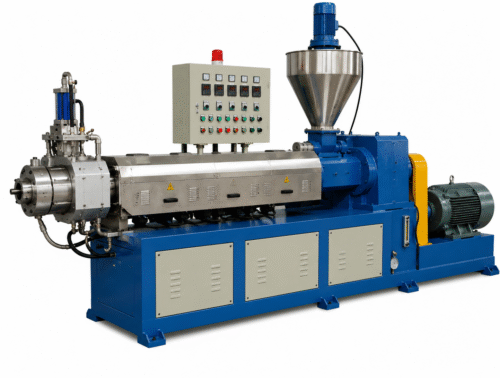
 Rubber Hot Feed Extruder
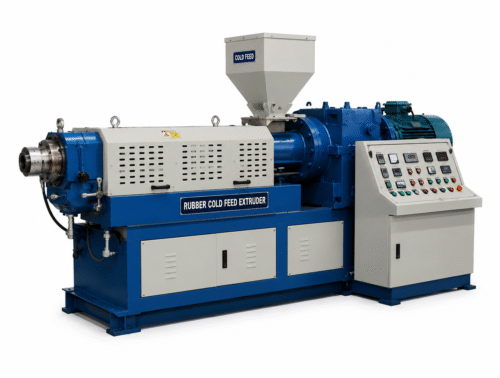 Rubber Cold Feed Extruder
 Rubber Strainer – Reclaim Extruder
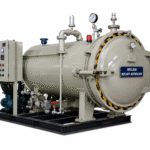 Reclaim Rotary Autoclave
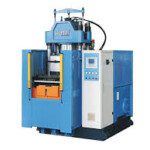 Compression Molding
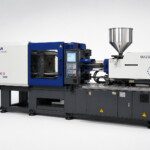 Injection Molding
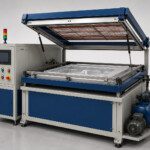 Vacuum Molding
 Rubber EVA Refiner Mill
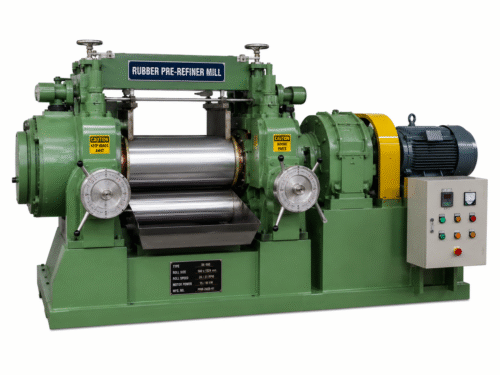 Rubber Pre-Refiner Mill
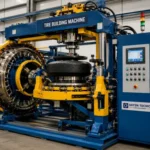 Tire Building Machine
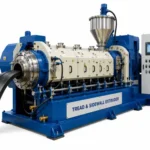 Tread & sidewall Extruder
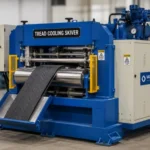 Tread Cooling skiver
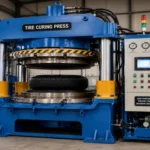 Tire curing press
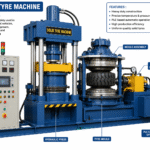
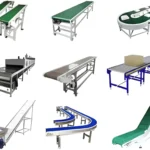
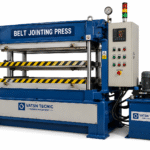 BELT JOINTING PRESS
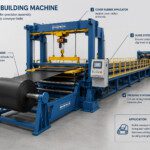 Belt Building Machine
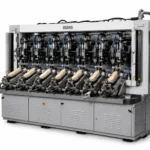
 Eva Footwear Injection Molding Machines
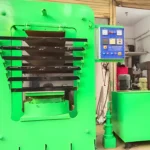 Hawaii Slipper Sole Sheet Machine
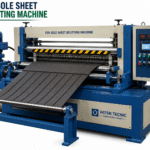 Eva Sole Sheet Splitting
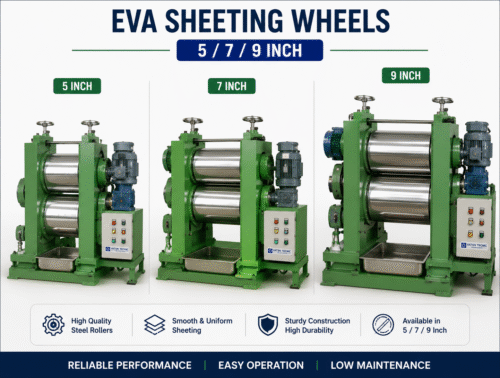 Eva Sheeting Wheels 5/7/9
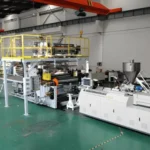 PVC Flooring Machine
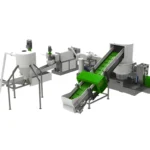 Plastic Pelletizing Line
 Filler / Masterbatch / PVC / TPR / EVA
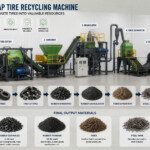
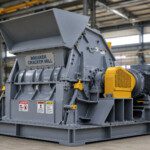 Breaker – Cracker Mill
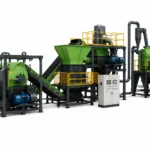 Shredder – Rasper Machines
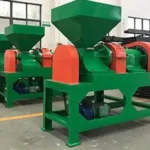 Waste Rubber Crumb Grinder Mill
Buy Rubber Extruder Machine in Noida: Check the Control Panel Handover

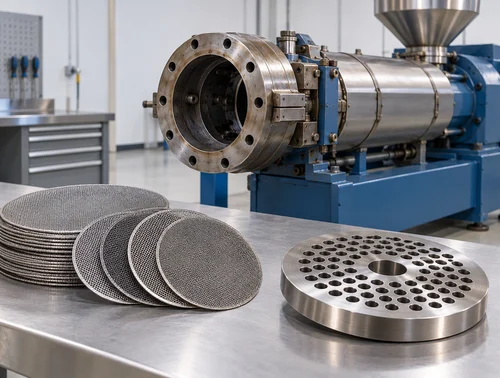
Quick answer: When you buy a rubber extruder machine in Noida, ask for the control panel documentation before you discuss price. The panel decides how quickly your team can run the machine, diagnose a fault and restart after a stoppage — and a panel without drawings is a machine that stops production for a week.
Extruders are mechanically forgiving and electrically intolerant. A worn screw still turns; a panel with no schematic turns into a guessing game at two in the morning. Buyers inspecting a rubber extruder machine in Noida should spend as much time on the panel as on the barrel.
This guide covers what a usable panel handover looks like, what to photograph, and the questions that separate a machine you can maintain from one you cannot.
What “panel handover” actually means
Handover is not a folder of loose sheets. It is a complete, matched set: the schematic that reflects the panel as built, the parameter list that reflects the recipe as tuned, and the spare list that reflects the components actually fitted. If any one is missing, the other two lose value.
Ask for the drawing revision and compare it with the components in the cabinet. Panels are modified in the field, and a drawing that predates the modification is worse than no drawing because it misleads.
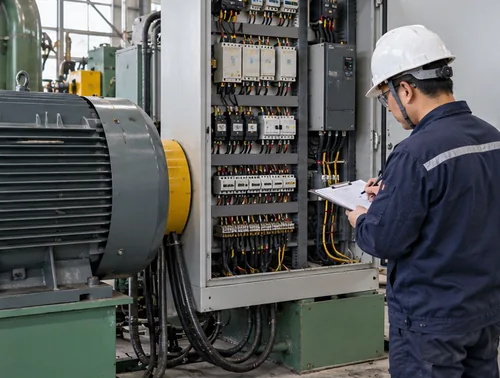
What to inspect inside the cabinet
- Labelling: every wire numbered, every component tagged to the drawing.
- Terminations: ferrules fitted, no twisted strands, no taped joints.
- Protection: correctly rated breakers, no bypassed overloads, earth continuity sound.
- Cooling: fans working, filters clean, no dust bridging across terminals.
- Spares: contactors and relays of a type available locally.
Documentation compared
| Document | What it gives you | What happens without it |
|---|---|---|
| As-built schematic | Trace any circuit in minutes | Reverse-engineering, hours per fault |
| Parameter list | Restore a recipe after a fault | Re-tuning by trial, scrap batches |
| Spare parts list | Order before failure | Downtime measured in weeks |
| Commissioning record | Baseline for comparison | No way to know what changed |
Automation level and who can support it
A basic relay panel can be repaired by any competent electrician. A PLC panel cannot. Before buying, identify which you are looking at, then ask who locally can program it. If the answer is nobody, the automation becomes a liability rather than an advantage.
| Control type | Strength | Limitation | Best fit |
|---|---|---|---|
| Relay logic | Simple, locally repairable, cheap | Limited recipes, more wiring | Single product, small plant |
| PLC with HMI | Recipes, trending, diagnostics | Needs programming support | Multiple products, larger plant |
Questions to ask before you commit
Ask whether the panel was modified after installation, who did the work, and whether the drawing was updated. Ask for the last fault history if the PLC stores one — a panel that trips on the same overload every month is telling you something about the machine, not the panel.
Confirm the supply requirements and whether the panel includes isolation and emergency stopping to local practice. A machine built elsewhere may meet its own standard and not yours.
What to put in the purchase agreement
List the documents as deliverables, not favours: schematic, parameter list, spare list, manual and commissioning record. Then confirm who supports the panel after delivery and for how long. Our notes on temperature zone control and hot feed versus cold feed cover the process side of the same machine.
Commissioning checks on the panel
Before the first production run, test every interlock and every alarm. Simulate a thermocouple failure and confirm the heater cuts out. Trip the overload and confirm the drive stops rather than restarting. These tests take an hour and reveal faults that would otherwise appear mid-batch.
Record the as-found settings before changing anything. It is tempting to adjust setpoints immediately, but the previous values are the only reference you have, even if they were wrong for the new product. Change one parameter at a time and note the effect.
Finally, label the panel in the language your operators read. A schematic in a language nobody on the floor understands is documentation for auditors, not for maintenance.
Check the panel door seals and the cable entries too. Dust entering through an open gland is the slowest failure mode to diagnose and the easiest to prevent.
Evaluating an extruder? Vatsn Tecnic supplies new, used and refurbished rubber processing machinery. Ask for the panel documentation as part of the inspection pack, and we will help you compare machines on maintainability rather than price alone.
To read More about Rubber Making Machine Visit Here:
https://www.indiamart.com/vatsntecnic/profile.html
Frequently asked questions
Why does the panel matter more than the screw?
A worn screw still produces; a panel you cannot diagnose stops the line completely. Screw wear is measurable and repairable, while undocumented control faults can take days to trace.
Can I get a schematic for an older machine?
Sometimes, from the original manufacturer. If not, have an electrician produce one before the machine enters production — it is cheaper than tracing faults reactively.
Is a PLC panel harder to maintain?
Only if nobody locally can program it. Confirm support before purchase; otherwise a relay panel is the lower-risk choice.
What is a parameter list?
The setpoints and recipe values stored in the controller: temperatures, speeds, and any timing. Without it, restoring the machine after a fault means re-tuning from scratch.
How do I check the panel condition?
Open the cabinet with the power isolated and look for heat marks, loose terminations, dust bridging and bypassed protection. Photograph what you find.
Should the panel be rewired for local practice?
Often yes, at least for isolation and emergency stopping. Confirm the standard in your area and budget for the work.
What spares should I stock?
Contactors, relays, fuses, a temperature controller and any proprietary module the panel uses. Proprietary items are the ones that stop production.
Does the panel affect product quality?
Yes — temperature control stability and speed consistency both come from the panel. A poorly tuned controller produces dimensional variation.