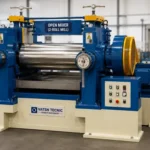
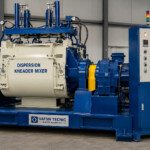

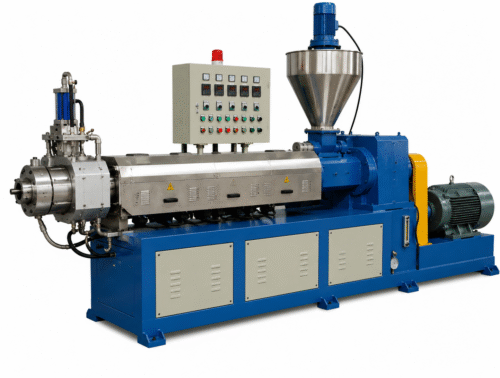
 Rubber Hot Feed Extruder
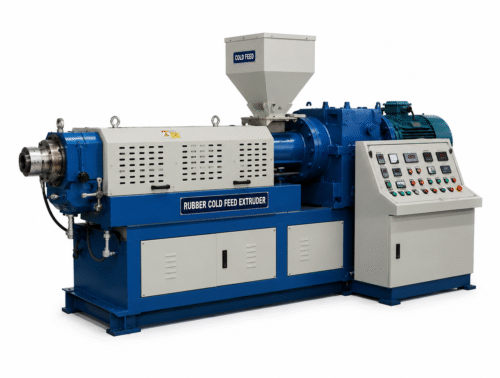 Rubber Cold Feed Extruder
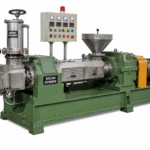 Rubber Strainer – Reclaim Extruder
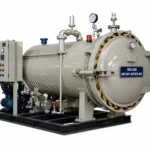 Reclaim Rotary Autoclave
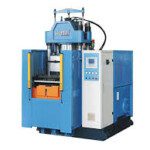 Compression Molding
 Injection Molding
 Vacuum Molding
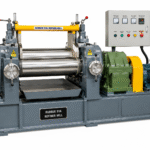 Rubber EVA Refiner Mill
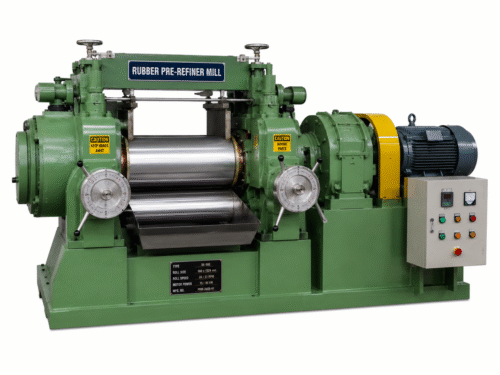 Rubber Pre-Refiner Mill
 Tire Building Machine
 Tread & sidewall Extruder
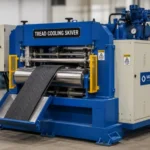 Tread Cooling skiver
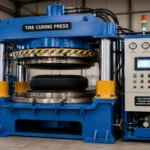 Tire curing press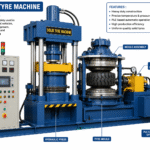

 BELT JOINTING PRESS
 Belt Building Machine
 Eva Footwear Injection Molding Machines
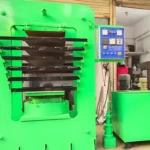 Hawaii Slipper Sole Sheet Machine
 Eva Sole Sheet Splitting
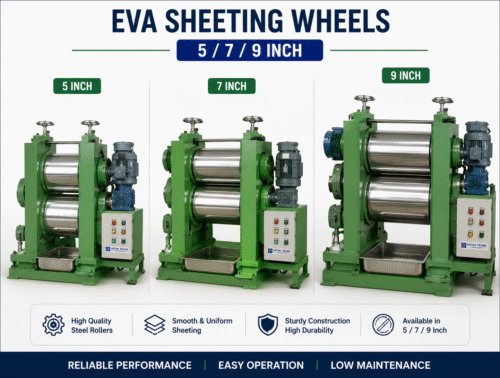 Eva Sheeting Wheels 5/7/9
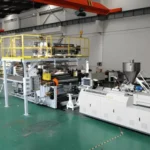 PVC Flooring Machine
 Plastic Pelletizing Line
 Filler / Masterbatch / PVC / TPR / EVA
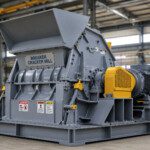 Breaker – Cracker Mill
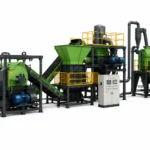 Shredder – Rasper Machines
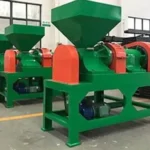 Waste Rubber Crumb Grinder Mill
Industrial Rubber Mixing Mill in Kolkata: Check Cooling Before Acceptance

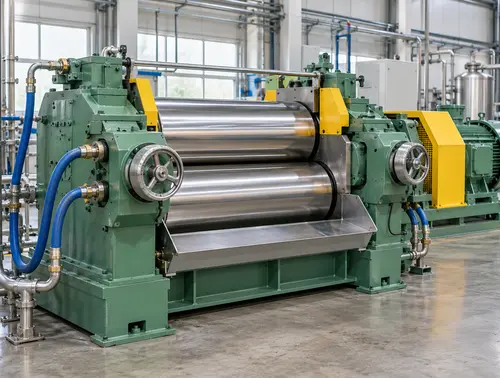
If you are assessing an industrial rubber mixing mill in Kolkata, do not accept the cooling-water circuit as a minor utility connection. Ask the seller to show stable flow through both rolls, leak-free joints, usable temperature records and clear isolation points during a controlled trial. A mill can rotate smoothly yet still give inconsistent compounds when the rolls cannot remove process heat predictably.
Why cooling belongs in the acceptance test
Two-roll mixing creates heat through friction and repeated deformation of the compound. The required roll-temperature range depends on the formulation, sequence and operating method, so a buyer should not accept a generic temperature promise. Instead, agree the test compound, batch sequence, sampling points, instruments and pass criteria before the trial. This makes the result repeatable and separates machine condition from operator technique.
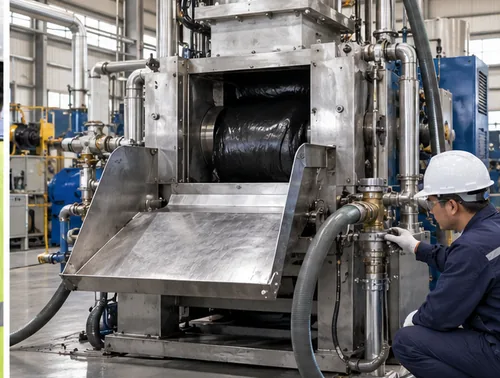
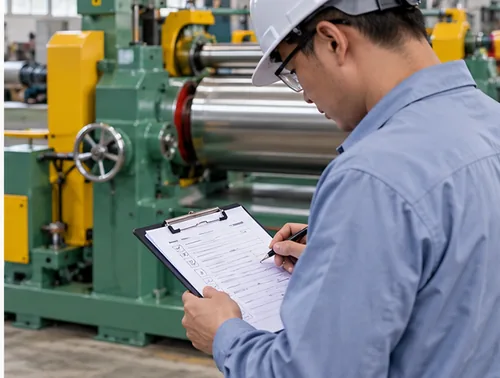
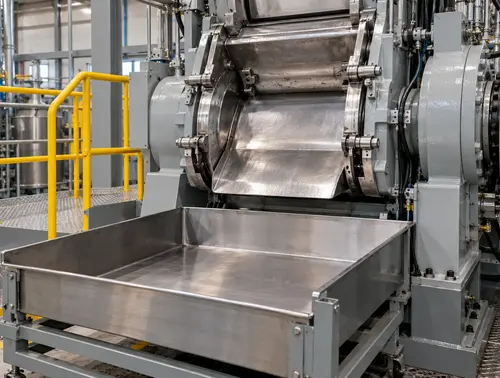
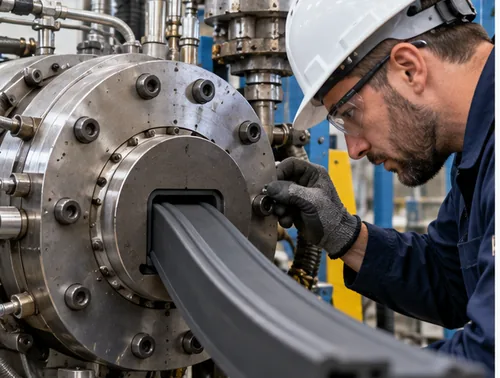
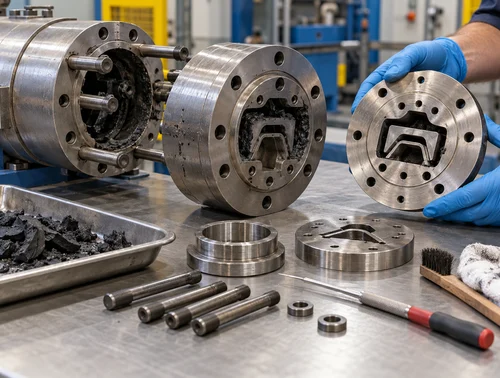
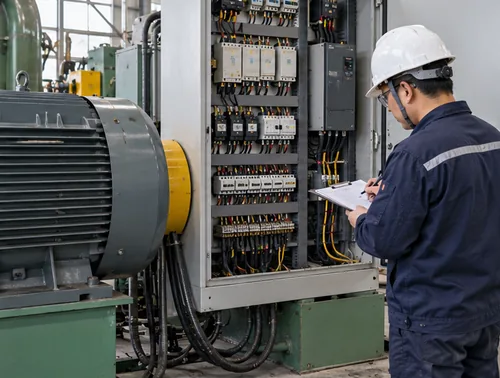
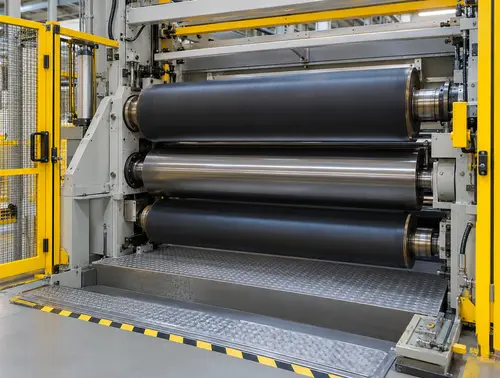
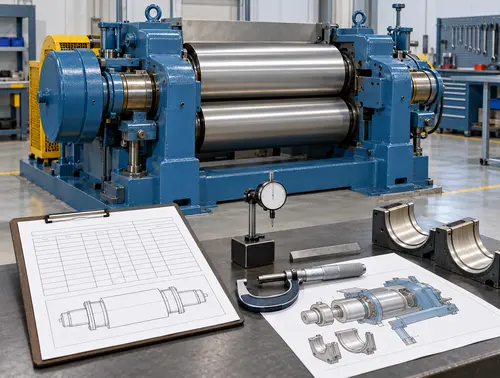
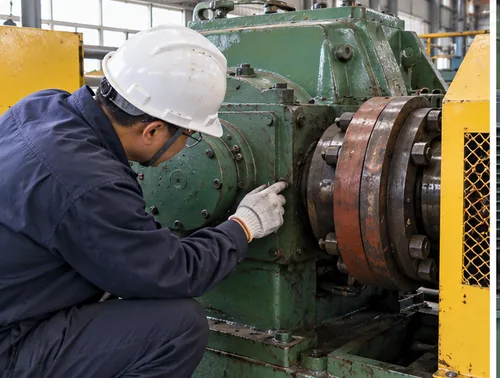
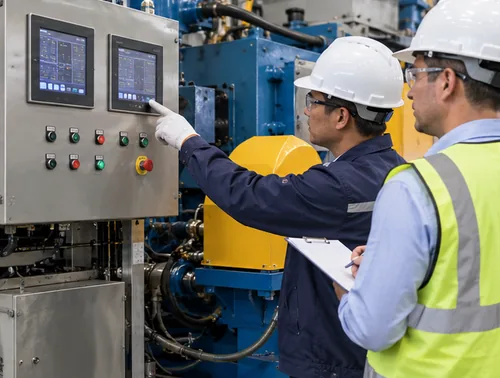
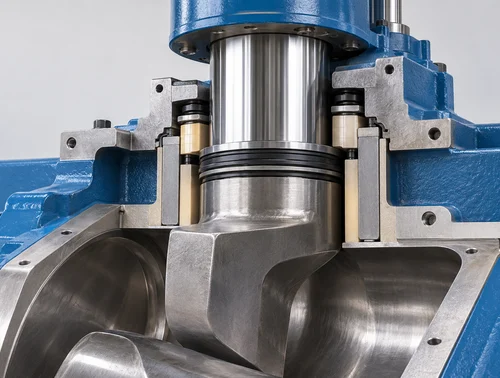
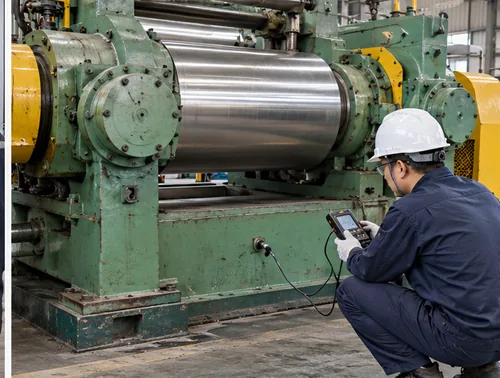
The illustrations in this guide show generic machinery and inspection activities. They do not prove the condition or availability of any specific machine. For a wider purchasing framework, see Vatsn Tecnic’s mixing-mill safeguard inspection guide.
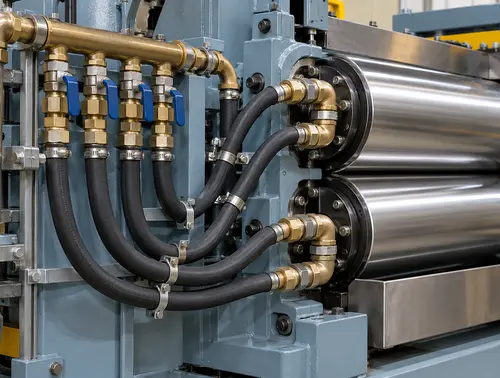
Map the complete water path
Start at the plant supply rather than at the visible hose. Record the supply source, pressure-control arrangement, strainer, valves, flexible connections, rotary unions, internal roll passages, return line and drain point. Ask which items are included with the machine and which must be provided by the buyer. A quotation that says only “water cooling” leaves room for costly gaps in pumps, filtration, hoses, instruments and treatment.
Questions for the seller
- Are both rolls cooled independently or through a shared circuit?
- Can each branch be isolated, balanced and drained?
- What evidence shows the internal passages are clear?
- Which seals, rotary unions and hoses were renewed?
- What water quality and maintenance instructions apply?
| Evidence | What it helps confirm | Limitation |
|---|---|---|
| Cold static leak test | Obvious leaks and joint integrity | Does not prove hot running stability |
| Measured inlet and return flow | Water is circulating through the planned path | Flow alone does not prove even roll temperature |
| Temperature log during a recipe trial | Response under realistic heat load | Valid only for the recorded recipe and conditions |
| Maintenance records | Past cleaning and replacement work | Records must match the machine identity |
Run a practical cooling trial
Before starting, confirm guards, stopping systems, safe access and isolation arrangements. Guidance such as the UK HSE’s PUWER overview is useful background, but local legal and site requirements still apply. Use competent personnel and the machine’s instructions.
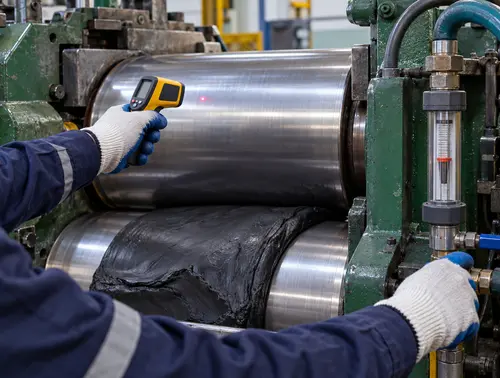
During the trial, record the initial roll surface temperatures, inlet temperature, return temperature and observable flow. Repeat surface readings at agreed positions across each roll face. Note valve positions and the time after each process step. Sudden differences can indicate blocked passages, incorrect connections, unstable supply, poor sensor technique or a process change; the reading is a prompt for diagnosis, not proof of one cause.
| Option | Advantage | Trade-off |
|---|---|---|
| Plant water direct to rolls | Simple interface where suitable supply already exists | Performance depends on plant pressure, quality and temperature |
| Dedicated recirculating unit | More controlled circuit and easier monitoring | Adds equipment, maintenance and floor-space needs |
| Manual balancing valves | Low complexity and visible adjustment | Settings can drift or be changed without a record |
| Instrumented branches | Provides evidence for troubleshooting | Instruments require suitable range, installation and calibration |
Write the acceptance record
For an industrial rubber mixing mill in Kolkata, the useful deliverable is not a verbal statement that “cooling works.” Record the machine identity, date, compound used, batch sequence, ambient conditions, instrument IDs, measurement locations, valve positions and results. Attach photographs of the actual connections. List unresolved leaks, restrictions or missing components with an owner and completion date.
Also define the boundary of supply. The seller may provide the machine connections while the buyer provides the pump, piping, heat exchanger, water treatment and electrical integration. Put that division in the purchase order. If performance depends on a minimum supply condition, state how that condition will be measured at site.
Buyer checklist before payment
- Match serial numbers and drawings to the offered machine.
- Inspect hoses, unions, valves and visible corrosion.
- Confirm both rolls can be isolated and drained safely.
- Witness cold and running leak checks.
- Record flow and temperatures during an agreed recipe.
- Confirm included instruments and utility equipment.
- Obtain cleaning, water-quality and maintenance instructions.
- Link final payment to documented closure of agreed defects.
To read More about Rubber Making Machine Visit Here:
https://www.indiamart.com/vatsntecnic/profile.html
Frequently asked questions
Does a spinning roll prove the cooling circuit works?
No. Rotation and cooling are separate functions; verify flow, leaks and temperature response under an agreed load.
Should both rolls have the same temperature?
Not automatically. The target depends on process intent, so use documented acceptance criteria rather than assuming equality.
Is an infrared thermometer enough?
It can support comparison when used consistently, but surface finish, angle and emissivity affect readings. Agree the method and instrument.
Why inspect the return line?
The return line helps confirm the path is complete and can reveal restrictions, leaks or poor routing that the inlet alone cannot show.
Should hoses be included in the quotation?
Only if the scope says so. Specify lengths, connection type, rating and responsibility instead of assuming they are included.
What records should accompany a used mill?
Request circuit drawings, replaced-part details, leak-test results, trial logs and maintenance instructions tied to the machine identity.
Can a seller guarantee compound temperature for every recipe?
A broad promise is not meaningful without defined materials and conditions. Use an agreed representative recipe and stated boundaries.
What if the site water supply is unstable?
Evaluate a dedicated recirculating or conditioned system with a competent engineer and define the interface before purchase.
Next step
Send Vatsn Tecnic the machine identity, intended compounds, trial recipe and available utility details. Ask for a written cooling-circuit scope, instrument list and evidence plan before committing to an industrial rubber mixing mill in Kolkata. Preserve the signed trial record with the final drawings so the site team receives the same technical baseline used for purchase.