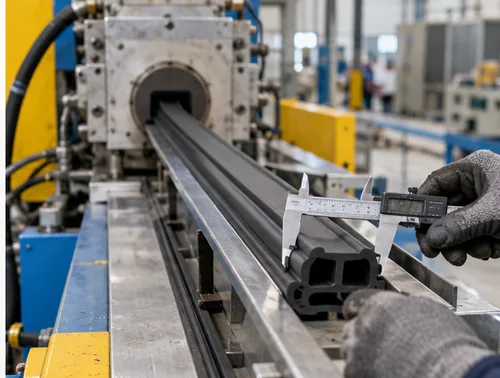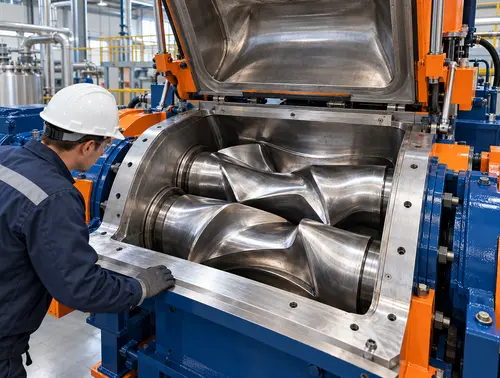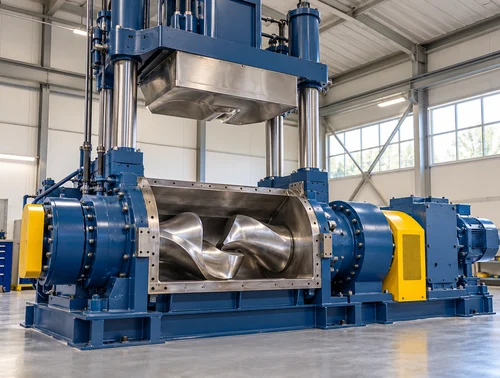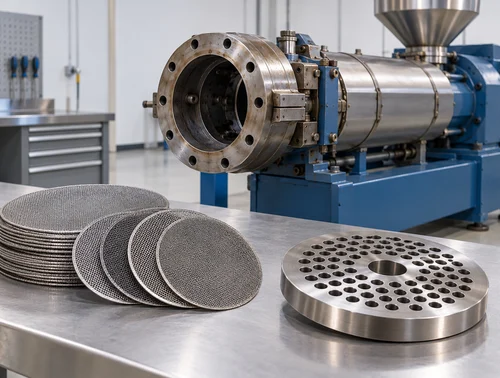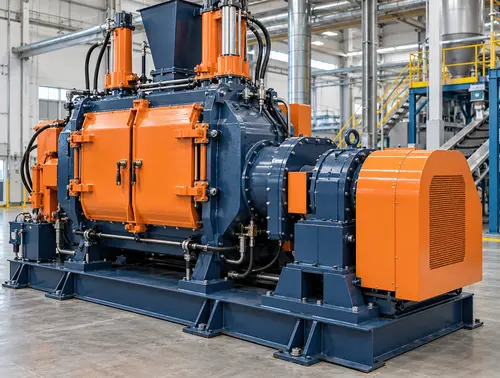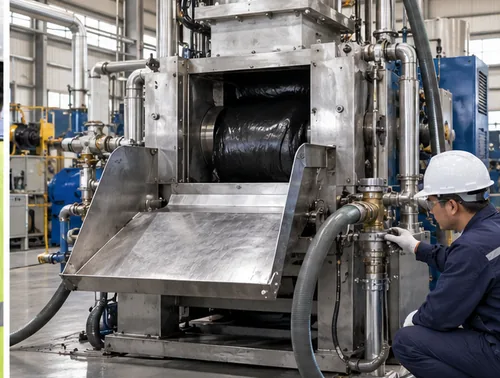
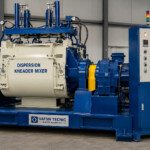
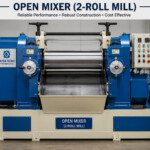
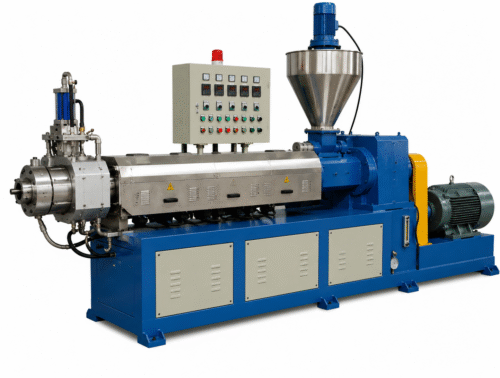
 Rubber Hot Feed Extruder
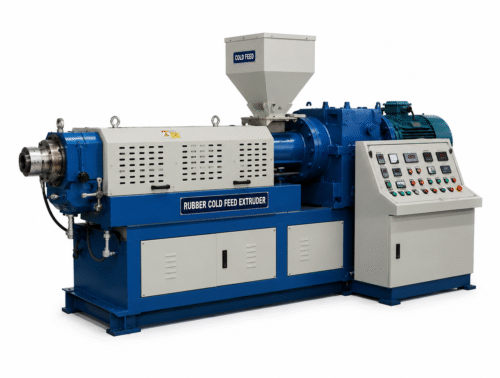 Rubber Cold Feed Extruder
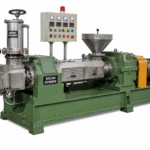 Rubber Strainer – Reclaim Extruder
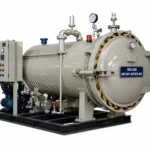 Reclaim Rotary Autoclave
 Compression Molding
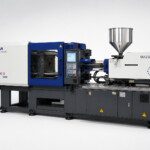 Injection Molding
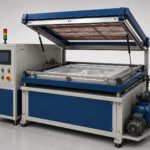 Vacuum Molding
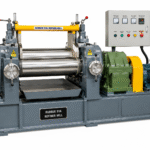 Rubber EVA Refiner Mill
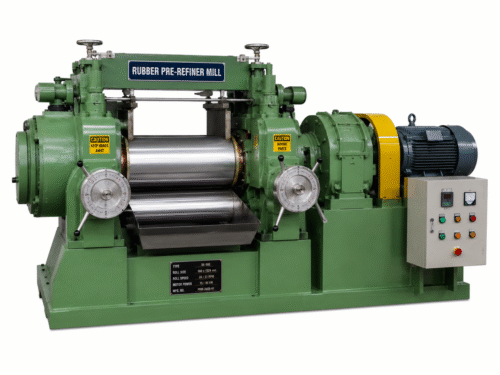 Rubber Pre-Refiner Mill
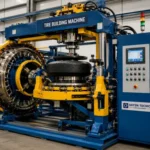 Tire Building Machine
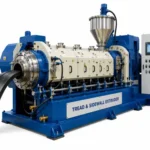 Tread & sidewall Extruder
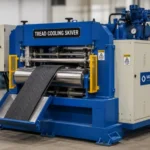 Tread Cooling skiver
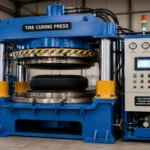 Tire curing press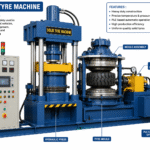
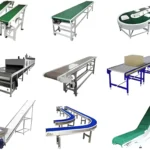
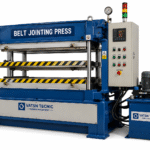 BELT JOINTING PRESS
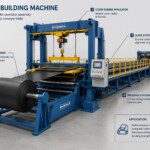 Belt Building Machine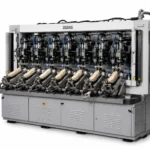
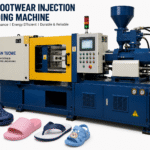 Eva Footwear Injection Molding Machines
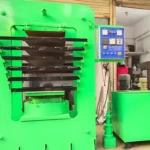 Hawaii Slipper Sole Sheet Machine
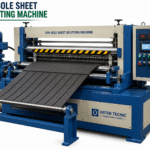 Eva Sole Sheet Splitting
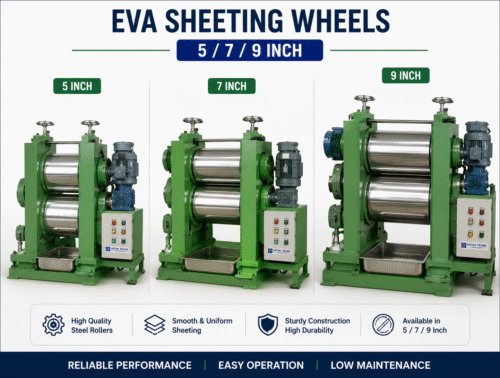 Eva Sheeting Wheels 5/7/9
 PVC Flooring Machine
 Plastic Pelletizing Line
 Filler / Masterbatch / PVC / TPR / EVA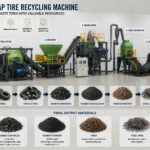
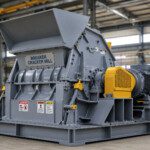 Breaker – Cracker Mill
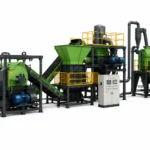 Shredder – Rasper Machines
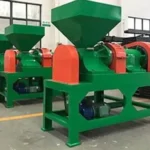 Waste Rubber Crumb Grinder Mill
Top Refiner Mill Retailer in Surat

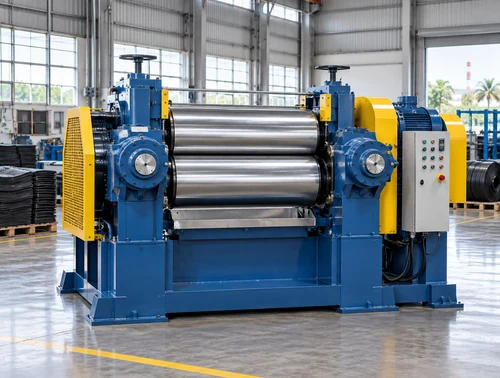
Looking for a reliable refiner mill retailer in Surat? A suitable rubber refiner mill should be selected by checking roll design, capacity, cooling, safety systems, after-sales support and total operating cost-not only by comparing the purchase price. VatsnTecnic supplies rubber-processing machinery and can help buyers match a refiner mill with their material, output and production conditions.
What is a rubber refiner mill?
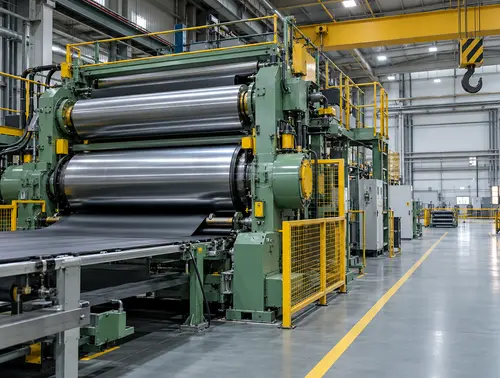
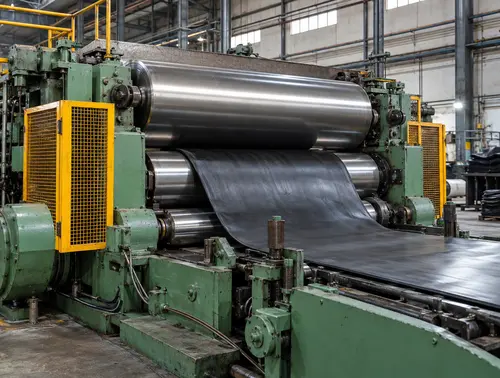
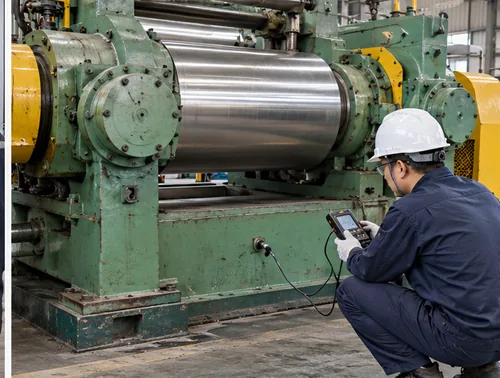
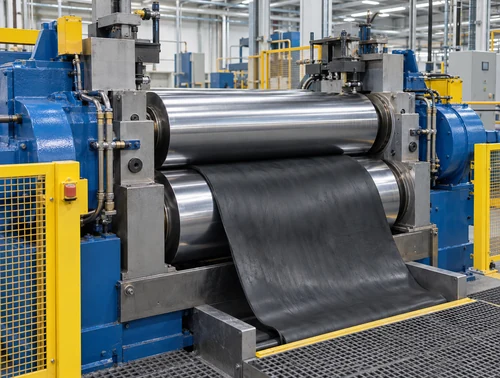
A rubber refiner mill is a two-roll processing machine in which rubber is softened, homogenised and formed into a more consistent sheet. Cooling water or another temperature-control system is generally provided so that excessive heat build-up can be managed.
Refiner mills are commonly used after reclaiming, mixing or granulation. Inconsistent rubber, reclaimed rubber and compounds containing small agglomerates can be refined before they are sent to calendering, extrusion, moulding or other downstream operations. Related rubber reclaim machinery may also be evaluated when a complete recycling workflow is being planned. The final result is influenced by the roll diameter, working length, roll speed, speed ratio, drive power, roll-gap adjustment and cooling arrangement.
Why a refiner mill retailer in Surat should be evaluated carefully
Surat’s manufacturing base includes rubber-product producers, footwear units, engineering businesses and recycling operations. A compact refiner mill may be appropriate for development work, while a heavier machine may be required for continuous reclaim processing.
Technical suitability should be established before an order is placed. The material type, expected hourly output, sheet thickness, available electrical supply, floor space, ventilation and operator skill level should be recorded. A refiner mill retailer in Surat that can provide a written specification, installation guidance, spare-parts support and operating recommendations will usually reduce commissioning risk.
Important specifications to compare
- Roll size: Working length and diameter should be matched to the required throughput and sheet width.
- Roll-gap adjustment: Mechanical, hydraulic or motorised adjustment should be selected according to the required repeatability and production speed.
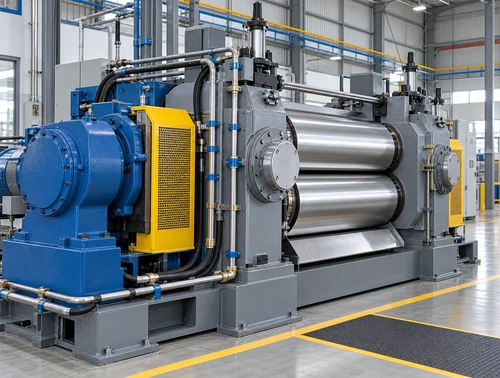
- Temperature control: Cooling channels, flow control and temperature monitoring should be checked because heat affects compound consistency.
- Drive and transmission: Motor rating, gearbox condition, torque capacity and overload protection should be confirmed.
- Safety: Emergency stops, nip protection, guards and accessible isolation points should be included and tested.
- Serviceability: Bearings, seals, scrapers, electrical parts and other wear items should be available through a practical support channel.
Benefits and limitations of buying a refiner mill
| Pros of buying the machine | Cons and risks to be managed |
|---|---|
| Consistent refining can be achieved when the gap and temperature are controlled. | Capital cost, electrical work and installation space will be required. |
| In-house processing control can be improved and outside processing dependence can be reduced. | Operators must be trained and safety procedures must be followed at every shift. |
| Reclaimed or difficult rubber can be prepared for downstream production. | Rolls, bearings, seals and scrapers will require inspection and periodic replacement. |
| Production capacity can be expanded when the correct roll size is selected. | Under-utilisation can increase the payback period if demand has not been confirmed. |
Can a refiner mill business be started in Surat?
A rubber-refining or reclaim-processing business can be considered when a dependable supply of rubber scrap and a defined customer base are available. The business case should be built from verified local demand rather than from machine capacity alone. Revenue may be generated through toll processing, sale of refined rubber or production of compound-ready sheets, depending on the chosen model.
Before investment, feedstock quality, electricity cost, labour availability, floor loading, fire protection, dust control, waste handling and statutory requirements should be assessed. Trial batches should be requested where possible. A maintenance reserve and working-capital budget should also be included.
| Pros of starting a refiner-mill business | Cons and risks to be managed |
|---|---|
| Demand can be served from tyre, footwear, moulding and general rubber-product units. | Stable feedstock and repeat customers must be secured before full capacity is assumed. |
| Value can be added to rubber scrap through sorting, refining and consistent preparation. | Quality variation, contamination and moisture can reduce yield and customer acceptance. |
| Processing services can be scaled by adding shifts or complementary equipment. | Power, labour, compliance, maintenance and logistics costs can be substantial. |
| Local delivery can be made faster for customers in Surat and nearby industrial areas. | Working capital can be tied up in scrap inventory and finished material. |
How VatsnTecnic can be evaluated as a supplier
When a refiner mill retailer in Surat is being compared, supplier quality should be verified through a clear quotation, machine photographs or inspection access, specification drawings, warranty terms and commissioning details. The buyer should ask which components are standard, which parts are imported, how quickly spares can be supplied and what training is included. Used or refurbished equipment should be checked for roll surface condition, bearing noise, gearbox backlash, electrical-panel condition, cooling performance and emergency-stop operation.
VatsnTecnic, also known as Vatsn tecnic, is presented as a refiner mill retailer in Surat for buyers who need equipment selection and supplier contact in India. More information can be reviewed on the VatsnTecnic company page, and machine enquiries can be sent through the contact information page. Exact capacity, configuration, delivery time and pricing should be confirmed in writing for the intended material and output. Independent inspection and a production trial are recommended for high-value purchases.
Buyer checklist before ordering
- Define the rubber type, contamination level, batch size and target sheet thickness.
- Compare at least two machine specifications on a like-for-like basis.
- Confirm power, cooling-water, foundation and ventilation requirements.
- Request warranty, installation, training and spare-parts terms.
- Check emergency-stop, nip-guard and isolation features before commissioning.
- Calculate total cost of ownership, including energy, labour, maintenance and downtime.
To read More about Rubber Making Machine Visit Here.
Frequently asked questions
1. What is the main use of a rubber refiner mill?
Rubber is softened, homogenised and formed into a more consistent sheet so that it can be used more reliably in later mixing, calendering, extrusion or moulding operations.
2. How is the correct refiner mill capacity selected?
Capacity is selected from the rubber type, feed condition, desired hourly output, roll size, motor power, working gap and operating cycle. A supplier trial is preferred when the material is reclaimed or highly variable.
3. Can reclaimed rubber be processed on a refiner mill?
Yes, reclaimed rubber can be refined when the machine is correctly configured and the feed is properly sorted. Contamination, moisture and particle size should be controlled before processing.
4. What safety features should be checked?
Nip guards, emergency stops, accessible isolation points, suitable electrical protection and safe operating procedures should be checked before production is started.
5. Should a new or used machine be purchased?
A new machine may provide current controls and a clearer warranty, while a properly inspected used machine may reduce the initial investment. Roll condition, drive health, safety systems, documentation and spare-parts availability should decide the purchase.
6. Is a refiner mill business profitable in Surat?
Profitability cannot be guaranteed. It should be calculated from verified customer demand, feedstock cost, processing yield, power consumption, labour, maintenance, logistics and the selling price of the refined material.
Note: Machine suitability and commercial returns depend on the material, configuration, operating practices and local business conditions. Specifications and claims should be confirmed with the supplier before purchase.