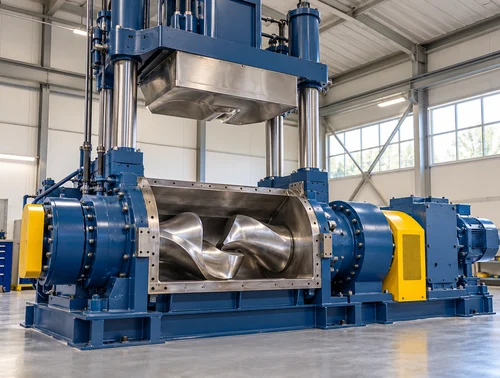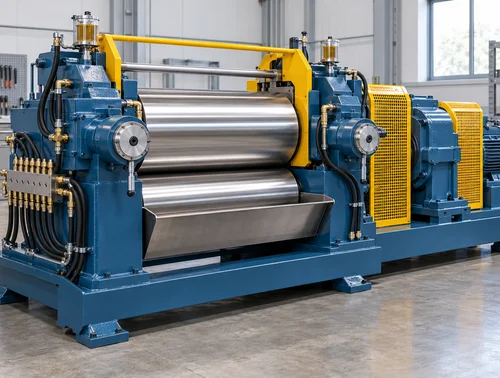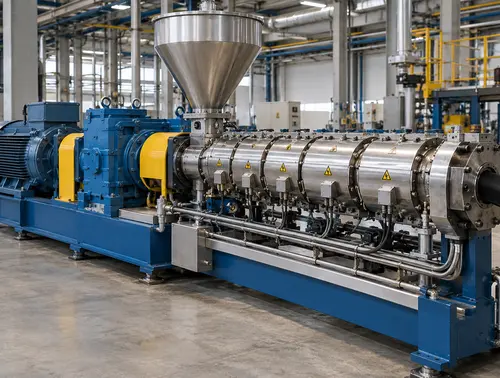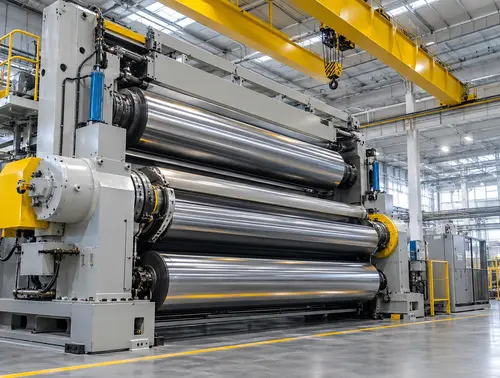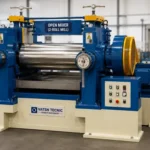
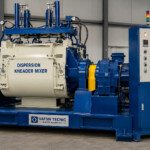
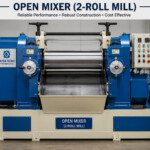
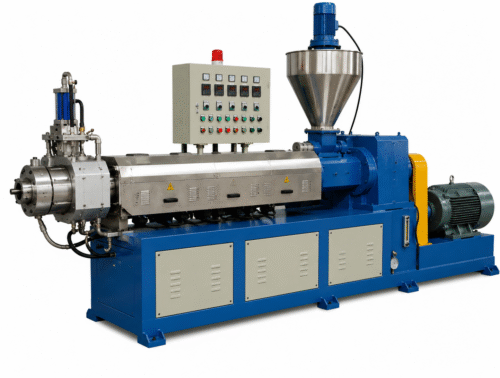
 Rubber Hot Feed Extruder
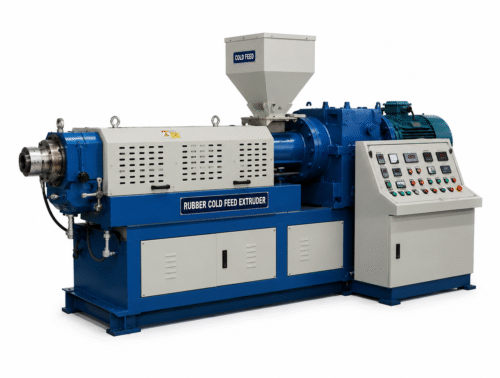 Rubber Cold Feed Extruder
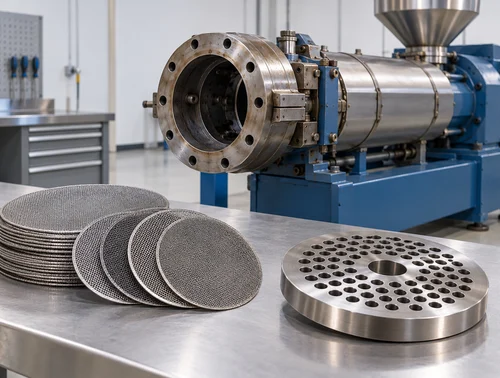
 Rubber Strainer – Reclaim Extruder
 Reclaim Rotary Autoclave
 Compression Molding
 Injection Molding
 Vacuum Molding
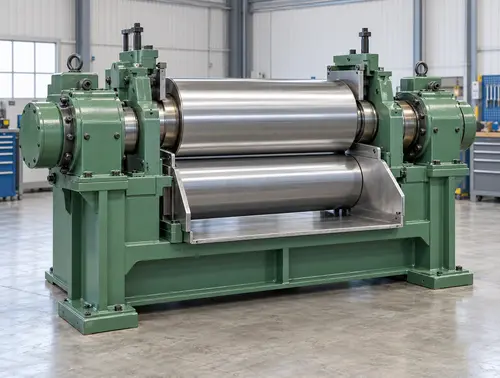
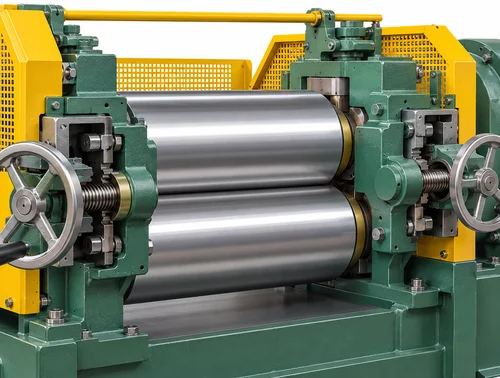
 Rubber EVA Refiner Mill
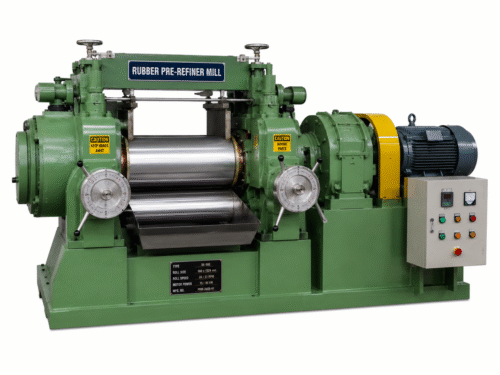 Rubber Pre-Refiner Mill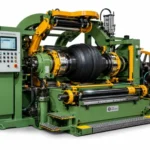
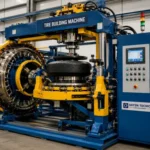 Tire Building Machine
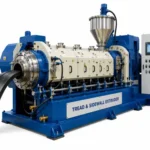 Tread & sidewall Extruder
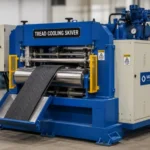 Tread Cooling skiver
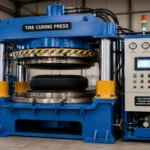 Tire curing press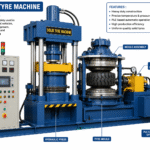
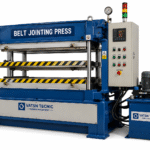 BELT JOINTING PRESS
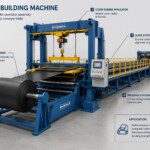 Belt Building Machine
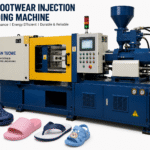 Eva Footwear Injection Molding Machines
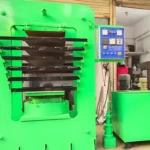 Hawaii Slipper Sole Sheet Machine
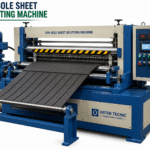 Eva Sole Sheet Splitting
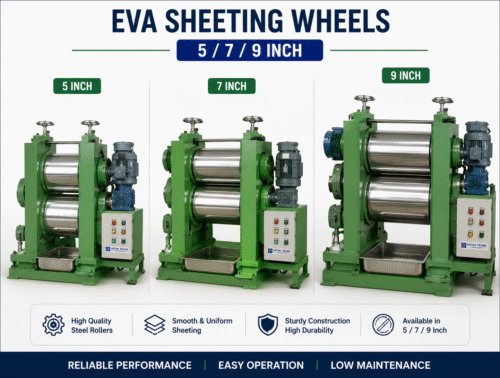 Eva Sheeting Wheels 5/7/9
 PVC Flooring Machine
 Plastic Pelletizing Line
 Filler / Masterbatch / PVC / TPR / EVA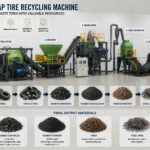
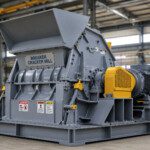 Breaker – Cracker Mill
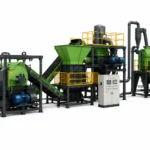 Shredder – Rasper Machines
 Waste Rubber Crumb Grinder Mill
Top Conveyor Belt Machine Retailer in Surat

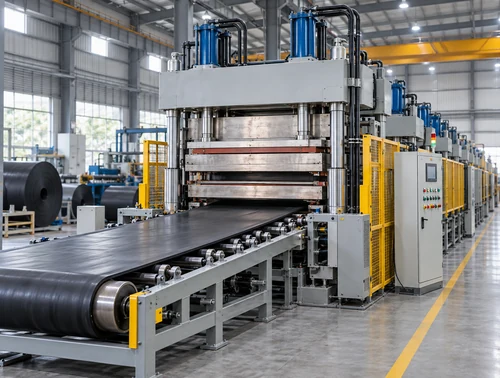
Looking for a conveyor belt machine in Surat? A suitable system should be selected by matching belt width, load, length, vulcanizing method, hydraulic capacity, heating control, safety equipment and after-sales support to the intended production. VatsnTecnic can be approached for conveyor-belt machinery guidance, while the purchase should be based on verified specifications and total ownership cost.
What is a conveyor belt machine?
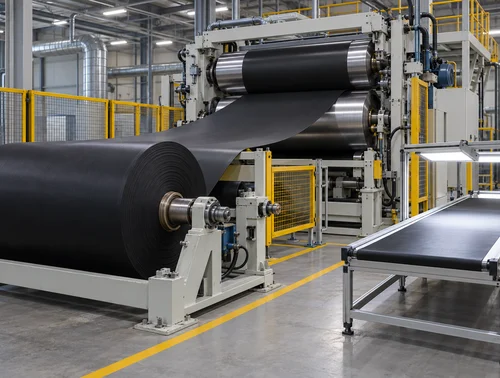
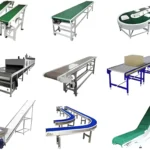
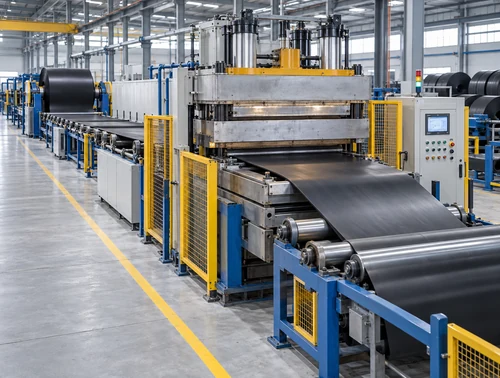
A conveyor belt machine is used to manufacture, join, repair or process rubber conveyor belts. Depending on the production line, the equipment may include a vulcanizing press, heating platens, hydraulic cylinders, belt alignment rollers, cooling arrangements, edge guides and control systems. The chosen configuration is influenced by belt width, thickness, carcass construction, cover compound and required joint strength.
Conveyor belts are used in mining, cement, power, recycling, logistics, steel, agriculture and material-handling operations. A reliable production system is expected to provide repeatable temperature, pressure and curing time. A poorly matched machine can create uneven joints, excess scrap, longer cycle times and avoidable customer complaints.
How a conveyor belt machine retailer in Surat should be evaluated
When a conveyor belt machine retailer in Surat is being compared, the supplier should be evaluated through technical documentation, machine photographs, inspection access, warranty terms and commissioning support. The retailer should be able to explain which belt constructions can be handled and which accessories are included.
Surat’s industrial base includes textile, engineering, chemical, recycling and manufacturing units. Local support can be useful when installation, troubleshooting or spare-parts coordination is required. A quotation should therefore be reviewed for response time, technician availability, training and post-installation support rather than only for the lowest initial number.
Specifications that affect conveyor belt machine selection
- Working width: Press width and belt width should be matched so that the joint can be produced without unsafe overhang or repeated repositioning.
- Heating system: Platens, temperature sensors, insulation and independent zone control should be checked.
- Hydraulic pressure: Cylinder capacity, pressure stability and platen parallelism should be confirmed for the selected belt thickness.
- Control panel: Temperature, pressure, curing time, alarms and emergency stops should be visible and easy to operate.
- Cooling: Controlled cooling can be required for repeatable joint quality and safe handling after curing.
- Safety: Guards, isolation points, emergency stops and safe access around heated platens should be provided.
- Installation: Foundation, electrical supply, hydraulic oil, lifting arrangements and operator training should be included in planning.
How the price and total cost should be compared
The price of a conveyor belt machine can change according to working width, press length, hydraulic design, automation, heating capacity, belt type and installation scope. New, used and refurbished equipment should be compared separately. Freight, commissioning, training, taxes, spare parts and warranty coverage should be shown in the quotation.
A low purchase price may not represent the lowest operating cost. Energy use, heating-cycle time, platen maintenance, hydraulic service, downtime and availability of replacement sensors should be considered. A production trial or reference installation can be requested when the belt construction is specialised.
Pros and cons of buying a conveyor belt machine
| Pros of buying the machine | Cons and risks to be managed |
|---|---|
| In-house belt joining and repair control can be improved. | Capital, floor space, electrical capacity and trained operators will be required. |
| Downtime can be reduced when urgent belt work is handled locally. | Heating platens, hydraulics, sensors and controls will require planned maintenance. |
| Joint quality can be standardised through controlled pressure, temperature and time. | Incorrect settings or preparation can still create weak or uneven joints. |
| Service capacity can be expanded by adding widths, accessories or shifts. | Under-utilisation can extend the payback period when demand is not verified. |
Pros and cons of starting a conveyor belt service business
A conveyor belt joining and repair business can be considered in Surat when recurring industrial demand has been verified. Services may include hot vulcanizing, cold joining coordination, belt repair, pulley-lagging support, inspection and emergency response. Customers and belt specifications should be identified before machine capacity is selected.
| Pros of starting the business | Cons and risks to be managed |
|---|---|
| Factories, warehouses, recycling plants and material handlers can be served from one region. | Technicians, transport, tools and safety equipment must be retained. |
| Preventive contracts and emergency repairs can create repeat demand. | Breakdown work can require travel, night shifts and fast spare-parts access. |
| Value can be added through inspection, accurate joint preparation and documented testing. | Weak joints or missed deadlines can affect customer operations and reputation. |
| Additional belt widths and accessories can be added as demand grows. | Working capital can be tied up in inventory and mobile service equipment. |
How VatsnTecnic can be evaluated as a supplier
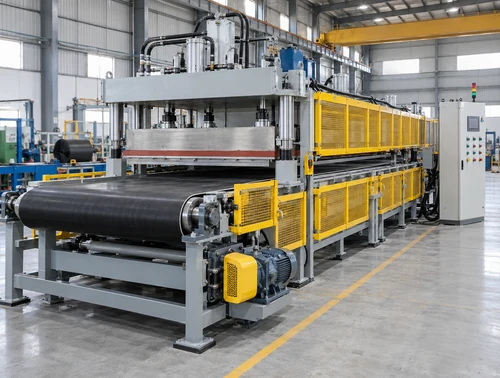
VatsnTecnic, also known as Vatsn tecnic, can be evaluated by buyers seeking rubber and conveyor-belt machinery information in India. The rubber conveyor belt production line category can be reviewed alongside related rubber-processing machinery.
For a conveyor belt machine retailer in Surat, the buyer should share belt width, belt thickness, carcass type, joint method, production volume, available power and whether new or refurbished equipment is preferred. Supplier background can be reviewed on the company information page, and technical enquiries can be sent through the contact information page.
Buyer checklist before ordering
- The belt construction, width, thickness and joint method should be defined.
- A complete technical specification and line-by-line quotation should be requested.
- Heating, hydraulic, electrical, foundation and ventilation needs should be confirmed.
- Safety guards, emergency stops, pressure controls and temperature sensors should be inspected.
- Warranty, commissioning, training and spare-parts terms should be obtained in writing.
- Energy, labour, maintenance, downtime and logistics should be included in total cost.
To read More about Rubber Making Machine Visit Here.
Frequently asked questions
1. What is the best conveyor belt machine for a Surat factory?
The suitable machine is determined by belt width, thickness, carcass, joint method, required output, hydraulic pressure, heating arrangement and service support.
2. What should be checked in a conveyor belt machine retailer in Surat?
Technical documentation, machine suitability, inspection access, warranty, commissioning, training, spare-parts support and response time should be checked.
3. Can a conveyor belt machine be used for repairs?
Many vulcanizing press systems can be used for belt joining and repair when the press width, heating profile and joint preparation are suitable for the belt.
4. Should a new or used machine be purchased?
A new machine may provide clearer warranty coverage, while an inspected refurbished machine may reduce the initial investment. Condition, safety and parts access should guide the decision.
5. What affects conveyor belt machine price?
Working width, press length, hydraulic capacity, heating zones, automation, cooling, installation, warranty and machine condition can affect the final quotation.
6. Is a conveyor belt repair business profitable?
Profitability cannot be guaranteed. It should be calculated from verified demand, technician cost, travel, tools, consumables, downtime exposure and realistic service pricing.
Note: Machine suitability and commercial returns depend on belt construction, configuration, operating practices and local market conditions. Specifications should be confirmed with the supplier before purchase.