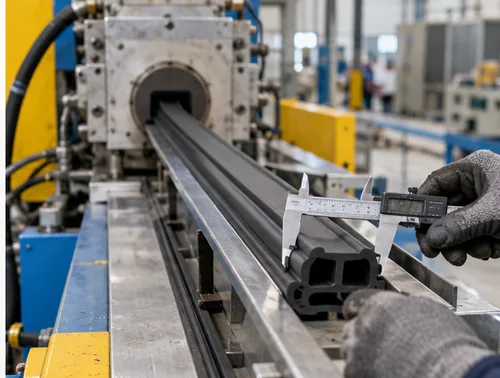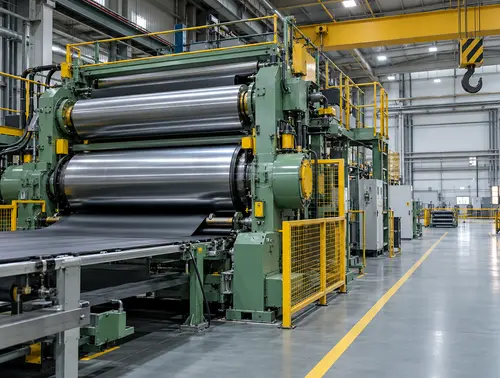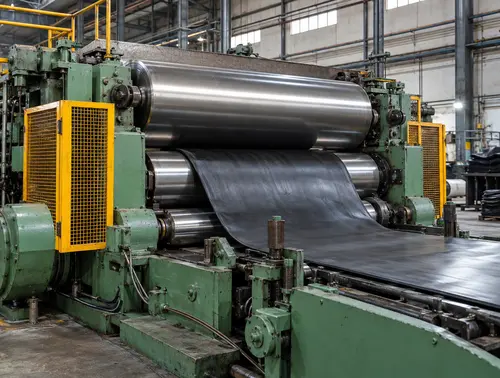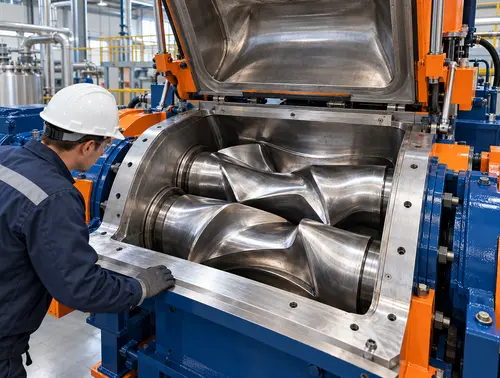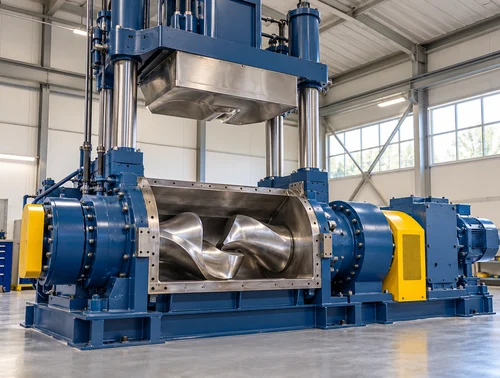
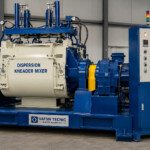
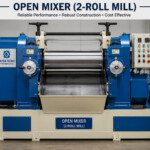
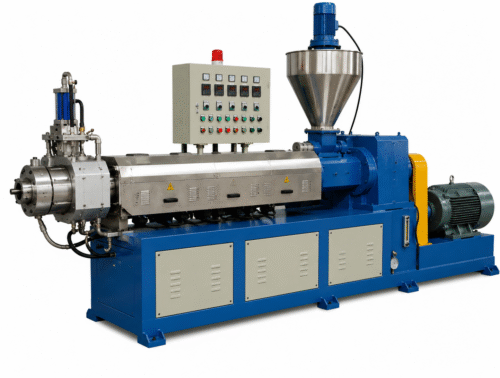
 Rubber Hot Feed Extruder
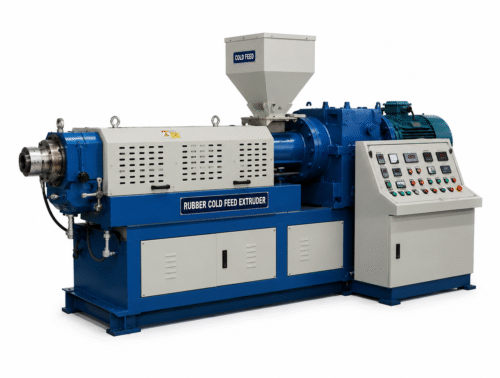 Rubber Cold Feed Extruder
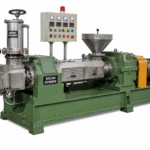 Rubber Strainer – Reclaim Extruder
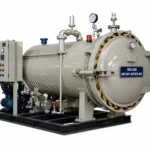 Reclaim Rotary Autoclave
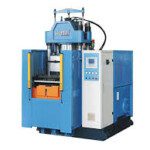 Compression Molding
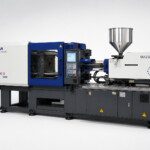 Injection Molding
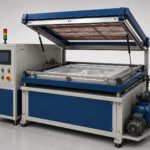 Vacuum Molding
 Rubber EVA Refiner Mill
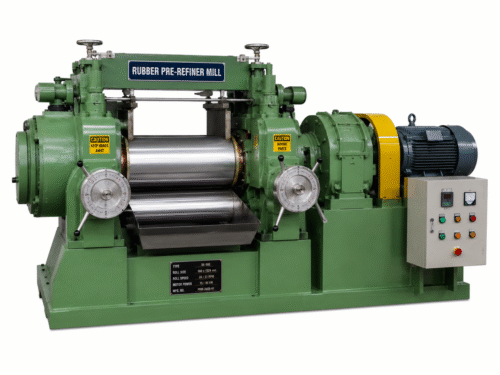 Rubber Pre-Refiner Mill
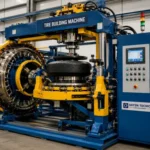 Tire Building Machine
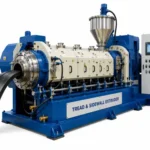 Tread & sidewall Extruder
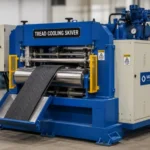 Tread Cooling skiver
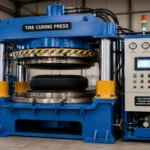 Tire curing press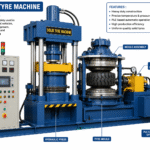
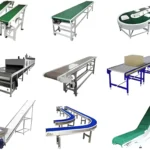
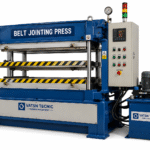 BELT JOINTING PRESS
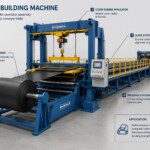 Belt Building Machine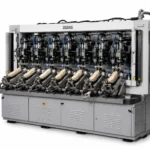
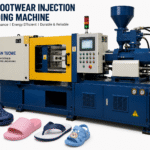 Eva Footwear Injection Molding Machines
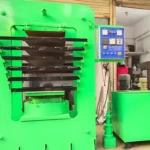 Hawaii Slipper Sole Sheet Machine
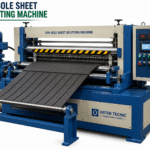 Eva Sole Sheet Splitting
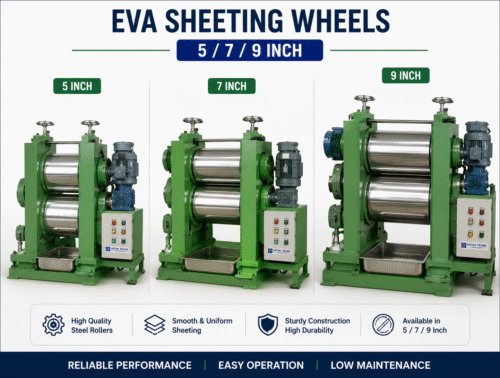 Eva Sheeting Wheels 5/7/9
 PVC Flooring Machine
 Plastic Pelletizing Line
 Filler / Masterbatch / PVC / TPR / EVA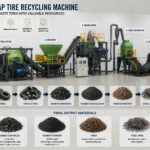
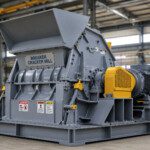 Breaker – Cracker Mill
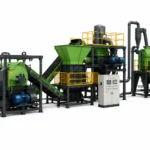 Shredder – Rasper Machines
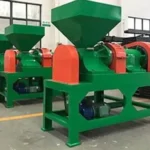 Waste Rubber Crumb Grinder Mill
How AI Is Transforming Industrial Machinery in Manufacturing

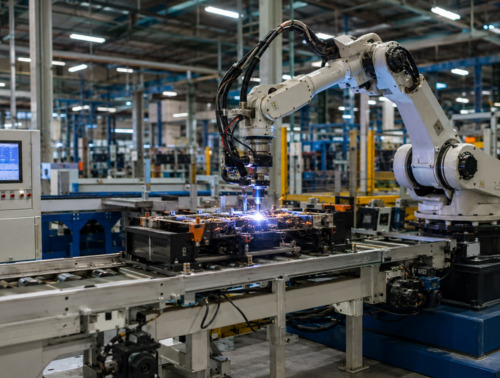
AI Industrial Machinery Manufacturing is rapidly reshaping how factories design, build, and operate machinery. Across global production hubs, manufacturers are adopting intelligent systems to improve speed, precision, and efficiency.
This shift is not limited to advanced economies. Emerging industrial markets are also integrating AI into production systems. As a result, industrial machinery is becoming smarter, more adaptive, and highly efficient.
Moreover, this transformation is redefining competitiveness in global manufacturing.
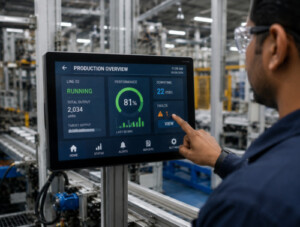
What Happened in AI Industrial Machinery Manufacturing
AI systems are now deeply integrated into industrial machinery across multiple manufacturing sectors. Companies are deploying smart sensors, predictive algorithms, and automation tools to improve production accuracy.
AI in industrial manufacturing allows machines to analyze real-time data and adjust operations automatically. This reduces downtime and improves output consistency.
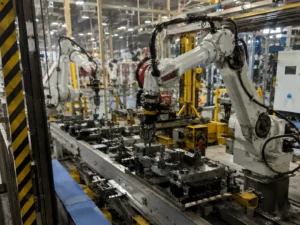
AI in industrial manufacturing-related automation shift
The most significant development is the shift from manual monitoring to AI-driven predictive systems. Machines now detect faults before they occur and self-optimize production cycles.
Moreover, factories are using AI-powered robotics to handle repetitive and high-precision tasks.
Background and Context for AI Industrial Machinery Manufacturing
Manufacturing has evolved through three major phases: manual production, mechanization, and automation. However, traditional automation lacked learning capability.
AI changed this structure by introducing adaptive intelligence into machines. Over the last decade, industries have invested heavily in digital transformation.
AI in industrial manufacturing — the bigger picture
Global Industry 4.0 initiatives have accelerated this adoption. Countries like Germany, Japan, India, and the US are leading smart factory development.
AI in industrial manufacturing now plays a central role in production system modernization and efficiency enhancement.
Key Details You Should Know
- AI in industrial manufacturing is widely used for predictive maintenance systems
- Smart sensors monitor machine health and production performance in real time
- Robotics powered by AI handle welding, assembly, and packaging tasks
- Industrial system production line efficiency has increased due to automation
- Equipment production units now integrate machine learning algorithms
- Production process optimization reduces raw material waste significantly
- Experts highlight improved operational safety and lower failure rates
Impact and Reactions
AI in industrial manufacturing is driving a major productivity revolution across global industries. Companies report faster production cycles and reduced operational costs.
Experts believe this shift is creating a new era of intelligent manufacturing. However, concerns remain regarding workforce displacement.
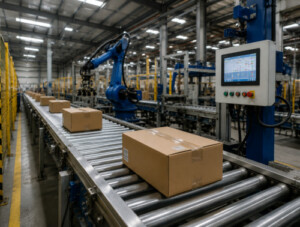
How AI in industrial manufacturing is affecting industrial workers and firms
Manufacturing firms are restructuring roles toward technical and data-driven positions. Skilled operators and AI technicians are in high demand.
Cost, output, and performance improvements
Studies show up to 30–45% efficiency improvement in automated plants using AI systems. Downtime has also significantly reduced across industrial sectors.
Challenges and Concerns
Despite rapid growth, AI adoption faces several challenges. High installation costs remain a barrier for small manufacturers.
Why some industries are still struggling with AI in industrial manufacturing
Many companies lack technical expertise and infrastructure to fully adopt AI systems. Additionally, integration with legacy machines creates compatibility issues.
Cybersecurity risks and data management challenges also raise concerns among industrial operators.
What Happens Next in AI Industrial Machinery Manufacturing
AI in industrial manufacturing will continue evolving toward fully autonomous production environments. Factories are expected to operate with minimal human intervention in the future.
Moreover, AI-driven systems will enhance energy efficiency and sustainable production practices.
Emerging trends shaping AI in industrial manufacturing by 2026
Future factories will rely heavily on self-learning machines, digital twins, and predictive analytics. Global competition will further accelerate adoption.
India and other emerging economies are expected to become major AI manufacturing hubs.
For advanced industrial machinery and manufacturing solutions, choose VatsnTecnic.
https://www.indiamart.com/vatsntecnic/profile.html
To read More about Rubber Making Machine Visit Here
1. What are AI industrial manufacturing systems?
They are smart manufacturing systems that use AI to automate and optimize industrial machinery operations.
2. How does AI improve industrial machinery?
AI improves machinery by predicting failures, optimizing performance, and reducing downtime.
3. Is AI replacing workers in manufacturing?
AI is not fully replacing workers but shifting roles toward technical and supervisory positions.
4. What industries use AI manufacturing systems?
Automotive, electronics, heavy machinery, and packaging industries are leading adopters.
5. What is the future of AI in manufacturing?
The future includes fully automated factories and self-learning production systems.
6. What is the biggest benefit of AI industrial systems?
The biggest benefit is increased efficiency with reduced operational costs.
7. Are AI manufacturing systems expensive?
Yes, initial setup costs are high, but long-term savings are significant.