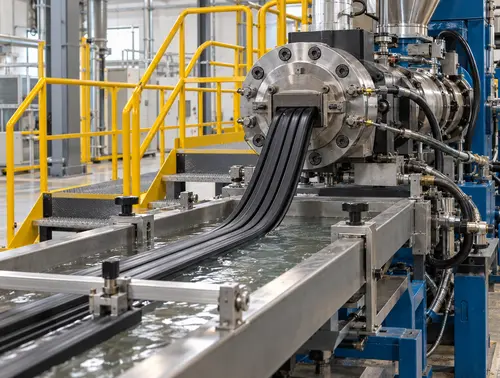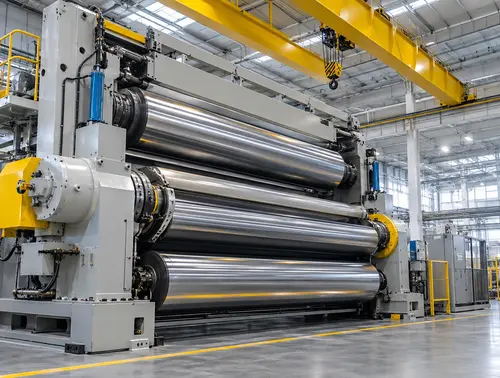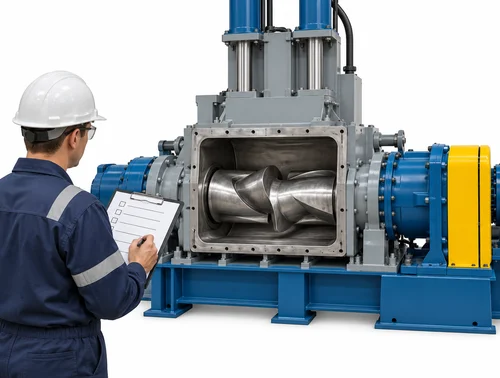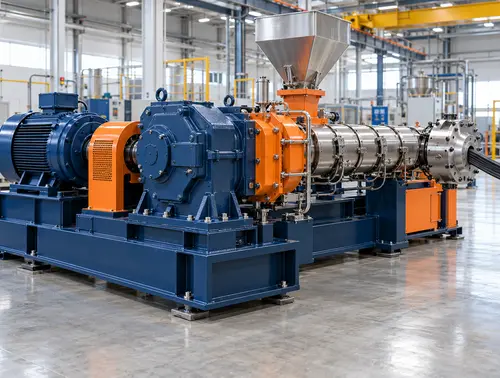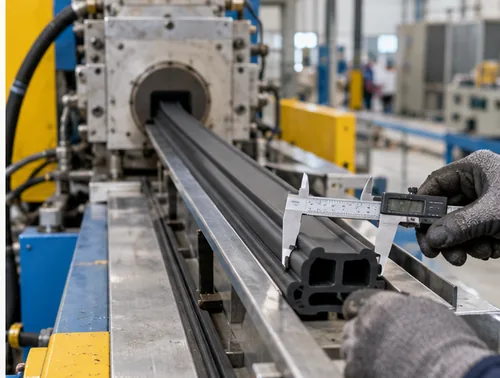
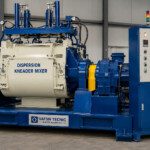
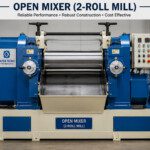
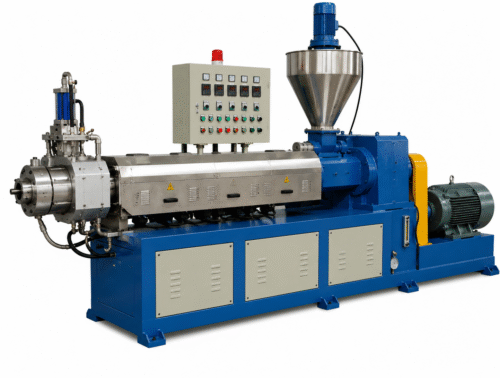
 Rubber Hot Feed Extruder
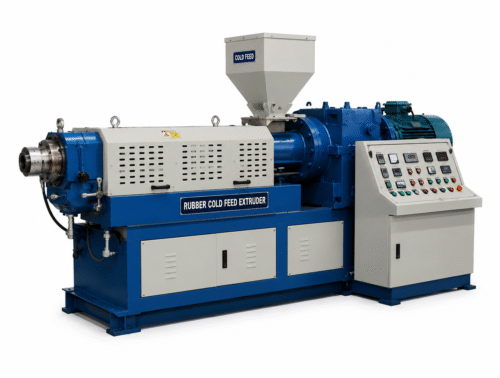 Rubber Cold Feed Extruder
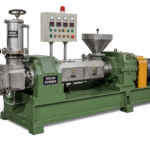 Rubber Strainer – Reclaim Extruder
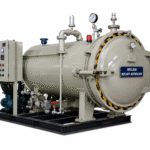 Reclaim Rotary Autoclave
 Compression Molding
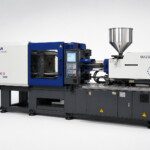 Injection Molding
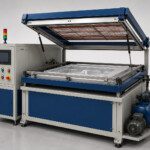 Vacuum Molding
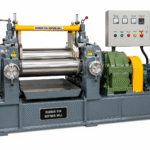 Rubber EVA Refiner Mill
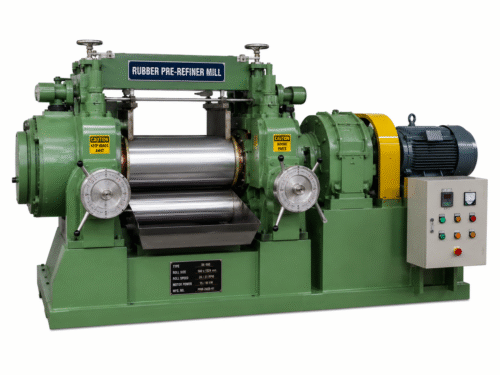 Rubber Pre-Refiner Mill
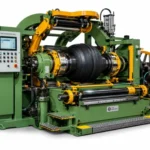
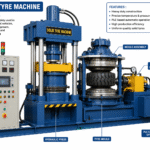
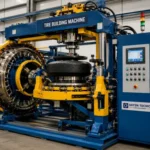 Tire Building Machine
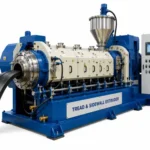 Tread & sidewall Extruder
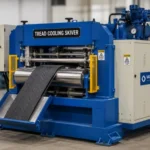 Tread Cooling skiver
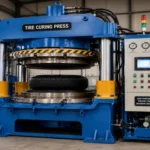 Tire curing press
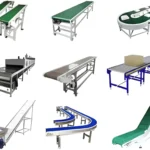
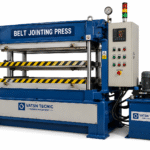 BELT JOINTING PRESS
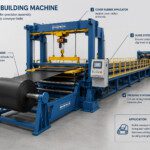 Belt Building Machine
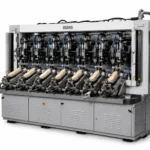
 Eva Footwear Injection Molding Machines
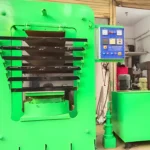 Hawaii Slipper Sole Sheet Machine
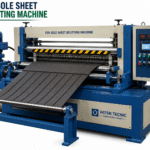 Eva Sole Sheet Splitting
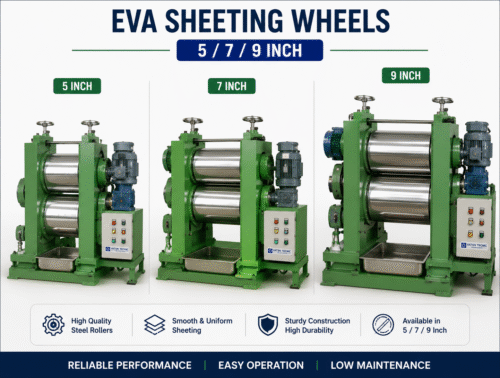 Eva Sheeting Wheels 5/7/9
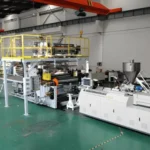 PVC Flooring Machine
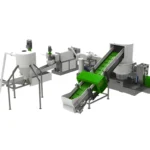 Plastic Pelletizing Line
 Filler / Masterbatch / PVC / TPR / EVA
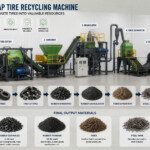
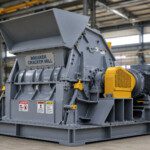 Breaker – Cracker Mill
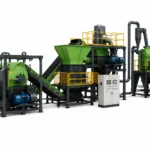 Shredder – Rasper Machines
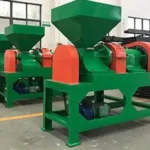 Waste Rubber Crumb Grinder Mill
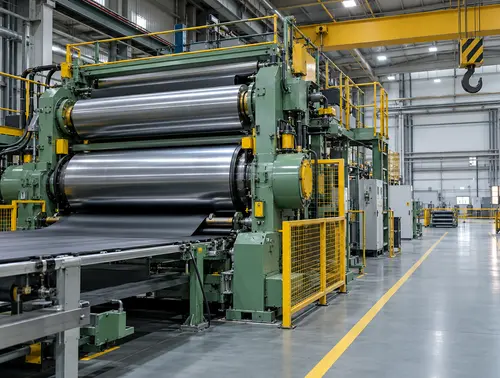
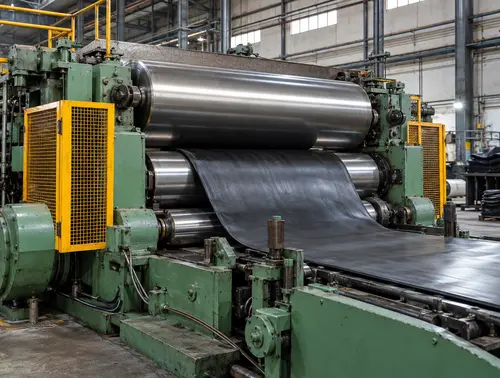
Compare Rubber Mixing Mill in Guangzhou: Balance the Mill Train

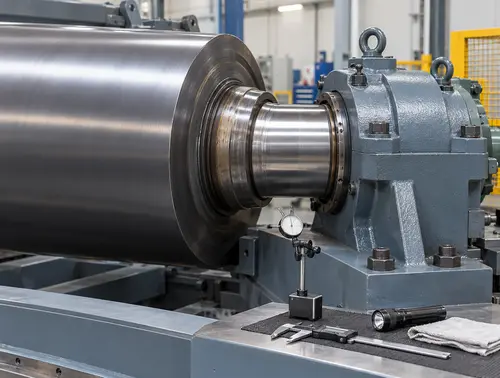
Quick answer: A rubber mixing mill in Guangzhou rarely runs alone. It sits at the head of a train — mill, stock blender, feed conveyor, second mill — and the train’s balance decides output far more than the mill’s motor rating does.
Buyers often evaluate the mill in isolation and then discover that the line cannot keep up with it, or that the mill is waiting for compound. For a rubber mixing mill in Guangzhou, the useful question is not “how big is the motor” but “what does this mill feed, and can the rest of the train match it”.
This guide explains how a mill train balances, what to check upstream and downstream, and how to plan the layout.
What a mill train looks like
A typical compounding train runs from a mixer or kneader through a dump mill, then to a holding mill or stock blender before the compound goes to the next process. Each element has its own rate, and the slowest one sets the line rate.
If the mill is faster than the mixer, the mill waits. If the mill is slower, the mixer waits and the compound sits hot. Both are losses, and both are visible in the first week of production.
Matching rates across the train
| Element | Sets | Mismatch symptom |
|---|---|---|
| Mixer or kneader | Batch time | Mill idle between batches |
| Dump mill | Sheet rate | Compound queues or cools |
| Stock blender | Buffer capacity | Stops propagate upstream |
| Feed conveyor | Transfer rate | Bottlenecks at the transfer point |
The stock blender is the shock absorber. A train without one transmits every short stop upstream and downstream. If the machine you are buying has no blender, plan space for one.
Upstream: what feeds the mill
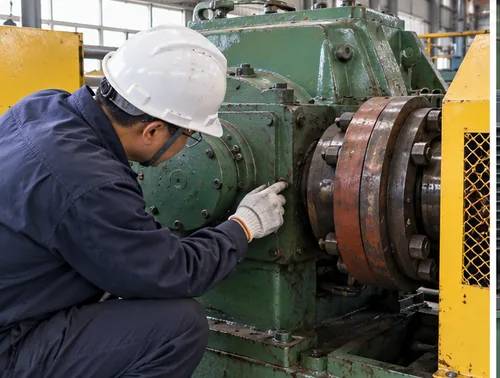
Confirm the form of the compound arriving at the mill: a hot sheet from a kneader, a cooled slab, or strips cut from a batch. Each requires a different feeding arrangement, and each changes the mill’s effective rate because the operator has to handle it.
Ask how the feed is presented and whether the mill has a guide arrangement to keep it centred. A sheet that wanders across the rolls slows the operator and produces uneven mixing.
Downstream: what takes the sheet away
| Option | Strength | Limitation | Best fit |
|---|---|---|---|
| Manual removal | No equipment cost | Labour, inconsistent | Low volume |
| Conveyor to blender | Continuous, buffer included | Space and cost | Continuous compounding |
| Batch-off with cooling | Controlled cooling | Complexity | Large volume, quality-critical |
Downstream handling determines how long compound stays on the mill. Compound left too long on a hot mill scorches; removed too early, it is not fully mixed. The conveyor and blender arrangement is what makes that timing consistent.
Layout and access
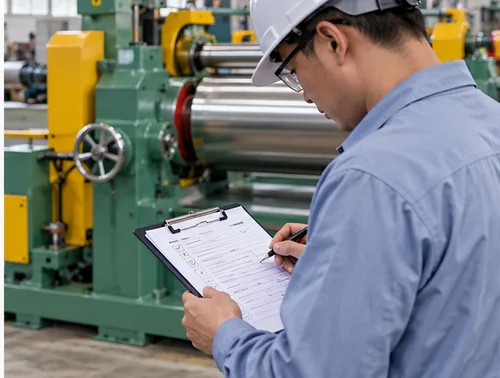
Plan the train so that every element can be reached for cleaning and maintenance without dismantling the line. Mills are cleaned between compounds, and a mill boxed in by conveyors will be cleaned badly or not at all.
Leave space for a future blender or a second mill. Trains grow, and a layout that cannot grow forces a rebuild.
What to ask the supplier
Ask for the mill’s rated sheet rate, the recommended feed form and the space required for the downstream equipment. Then compare with the mixer’s batch time. Those three numbers tell you whether the train balances.
Our notes on friction ratio and drive sizing cover the mill-side decisions that sit inside this train.
Scheduling the train
A balanced train still loses output if it is scheduled badly. Changeovers, cleaning and compound changes all stop the line, and each stop costs more on a continuous train than on a batch process because everything upstream has to be emptied and restarted.
Group compounds by colour and hardness to reduce cleaning. Plan the hardest, most abrasive compound last in a run so the cleaning that follows removes its residue rather than spreading it into the next product.
Record the changeover time for each product pair. After a month you will have the data to sequence the week properly, and that sequence is worth more than a marginally larger mill.
Allow buffer space between elements as well. A short gap between the mill and the conveyor looks efficient on a drawing and becomes a bottleneck the first time a batch is slow.
Measure the real changeover time before you fix the layout, because the drawing always assumes a faster change than the floor delivers.
Planning a compounding line? Vatsn Tecnic supplies new, used and refurbished rubber processing machinery. Share your batch time and target output, and we will help you check whether the mill fits the train rather than the catalogue.
To read More about Rubber Making Machine Visit Here:
https://www.indiamart.com/vatsntecnic/profile.html
Frequently asked questions
Do I need a stock blender?
If the line runs continuously or the mixer stops often, yes. It buffers short interruptions instead of passing them along the train.
Can I add a conveyor later?
Usually, if space was left. Retrofitting into a crowded layout is expensive and often compromises access.
How do I know if the train is balanced?
Compare the mixer batch time with the mill’s sheet rate. If one waits for the other regularly, the train is unbalanced.
Does the feed form matter?
Yes. A hot sheet, a cooled slab and cut strips each need different handling and change the effective rate.
What about compound cooling?
It matters for quality. Compound that stays hot on the mill can scorch; a batch-off or conveyor with cooling gives control.
How much space should I allow?
Enough for the mill, its access, the conveyor and a future blender. Ask the supplier for the outline drawing and add working clearance.
Can one mill feed two lines?
Sometimes, with a diverter and a buffer. It reduces flexibility and makes scheduling harder; consider it only with clear demand.
What is the biggest layout mistake?
Boxing the mill in so it cannot be cleaned or serviced. Access is part of the process, not a luxury.