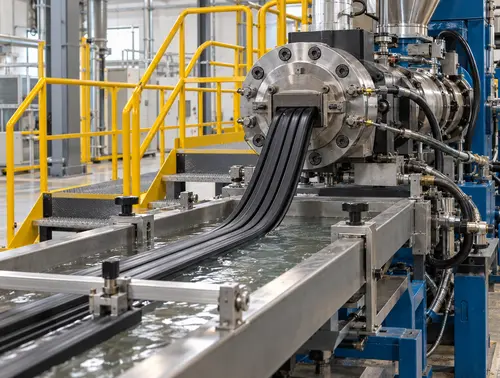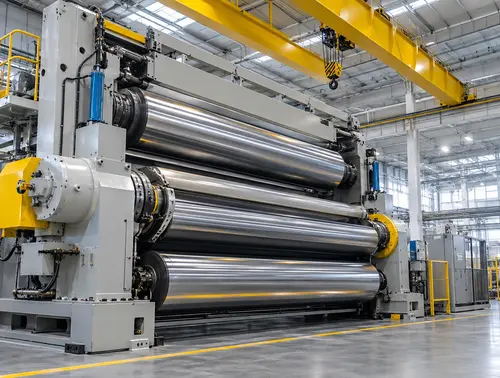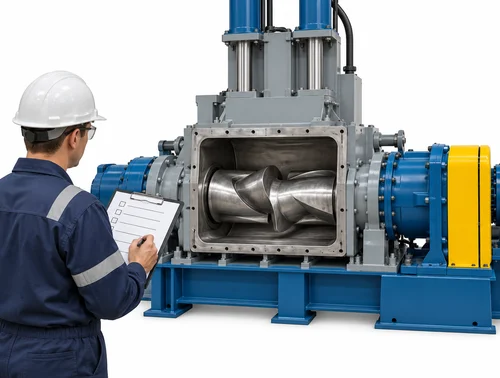
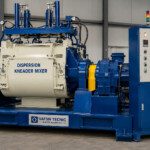
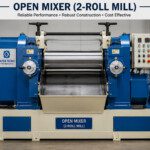
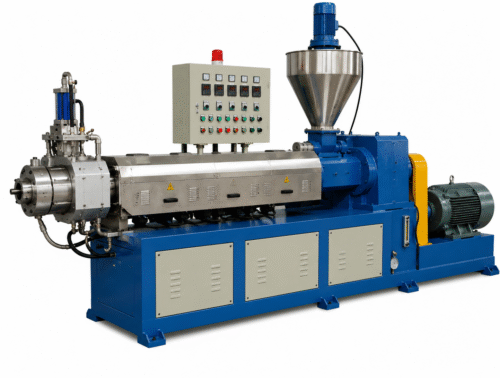
 Rubber Hot Feed Extruder
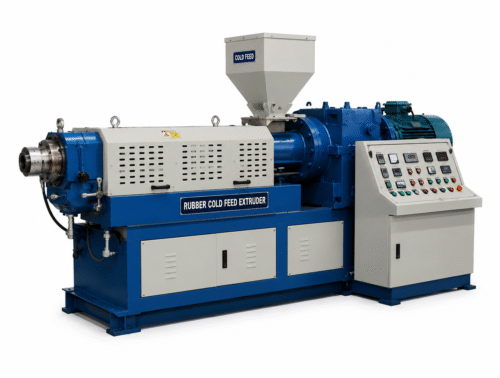 Rubber Cold Feed Extruder
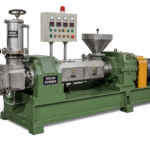 Rubber Strainer – Reclaim Extruder
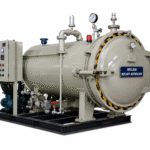 Reclaim Rotary Autoclave
 Compression Molding
 Injection Molding
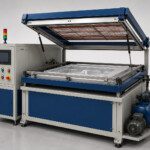 Vacuum Molding
 Rubber EVA Refiner Mill
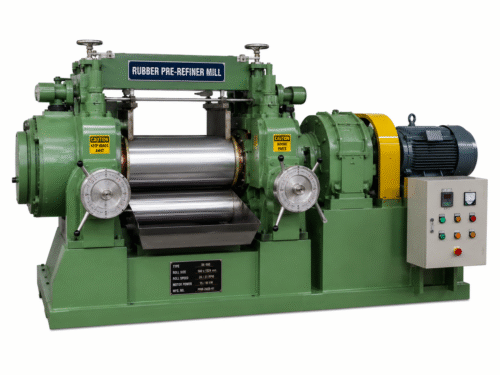 Rubber Pre-Refiner Mill
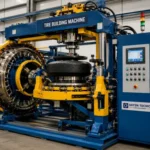 Tire Building Machine
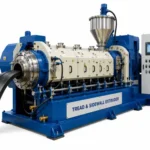 Tread & sidewall Extruder
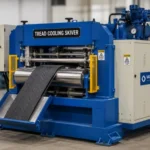 Tread Cooling skiver
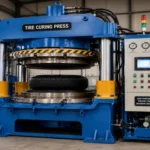 Tire curing press
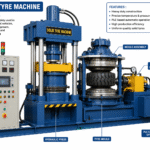
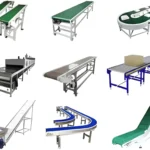
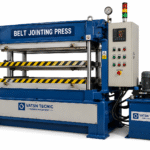 BELT JOINTING PRESS
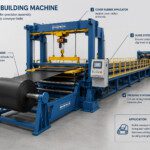 Belt Building Machine
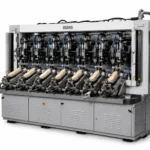
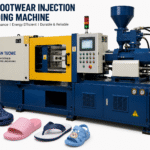 Eva Footwear Injection Molding Machines
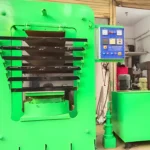 Hawaii Slipper Sole Sheet Machine
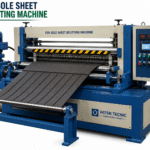 Eva Sole Sheet Splitting
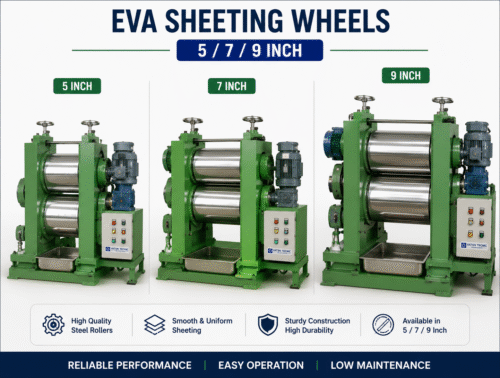 Eva Sheeting Wheels 5/7/9
 PVC Flooring Machine
 Plastic Pelletizing Line
 Filler / Masterbatch / PVC / TPR / EVA

 Breaker – Cracker Mill
 Shredder – Rasper Machines
 Waste Rubber Crumb Grinder Mill
Buy Rubber Extruder Machine in Mumbai: Diagnose Output Surge

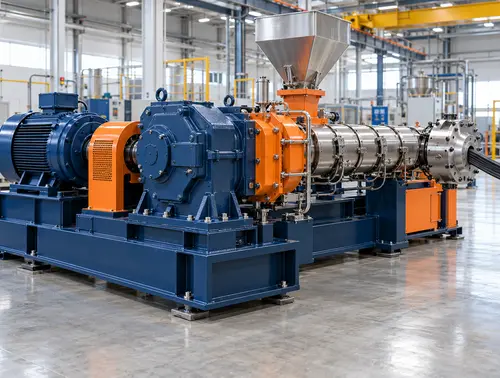
Quick answer: A rubber extruder machine in Mumbai that surges is not necessarily worn out. Output that rises and falls usually comes from a feed problem, a temperature mismatch or a die that is restricting flow unevenly — and each has a different fix.
Surge is the most common complaint on an extrusion line and the most often misdiagnosed. Buyers evaluating a rubber extruder machine in Mumbai should watch the output for several minutes at steady settings, because a machine that surges on the test stand will surge in production, and no amount of die adjustment will cure the underlying cause.
This guide breaks surge into its causes, shows how to tell them apart, and explains what to check before purchase.
What surge looks like
The extrudate leaves the die at a rate that varies cyclically or randomly. Dimensions drift, the surface ripples, and downstream equipment struggles to keep up. In mild cases the operator compensates by slowing the line; in severe cases the product is unusable.
The first step is to establish whether the variation is periodic or random. Periodic surge points to a mechanical cause such as a worn screw or a slipping drive. Random surge points to feed or temperature.
Separating the causes
| Pattern | Likely cause | How to confirm | Fix |
|---|---|---|---|
| Regular cycle, seconds | Screw or drive fault | Listen and watch the drive current | Inspect screw and coupling |
| Random variation | Feed inconsistency | Watch the feed zone | Stabilise the feed strip |
| Slow drift then recovery | Temperature control | Log zone temperatures | Correct cooling or setpoint |
| Variation with pressure | Die restriction | Compare die pressure | Rework or replace the die |
Run the diagnosis in that order. Feed first, because it is the cheapest to fix; die last, because it is the most expensive.
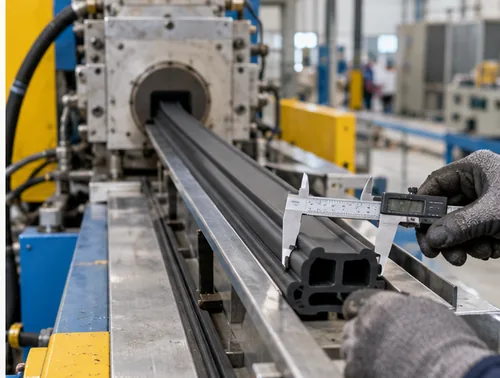
Feed and compound effects
Rubber does not flow like plastic. A strip that varies in thickness, or that cools before it reaches the screw, produces uneven filling. The screw then alternates between starved and flooded, and the output follows.
Check the feed path: is the strip at a consistent temperature, is it guided centrally, and does the feed roller grip without slipping? These are simple checks that are usually skipped in favour of blaming the screw.
Temperature and cooling
Temperature affects viscosity, and viscosity affects flow. A zone that oscillates around its setpoint will produce an output that oscillates with it. Log the zone temperatures over ten minutes and look for the same period in the output variation.
Cooling water temperature matters here. In a warm plant the return water may be too hot to hold the metering zone, and the controller responds by reducing heater output or slowing the line, which looks like surge.
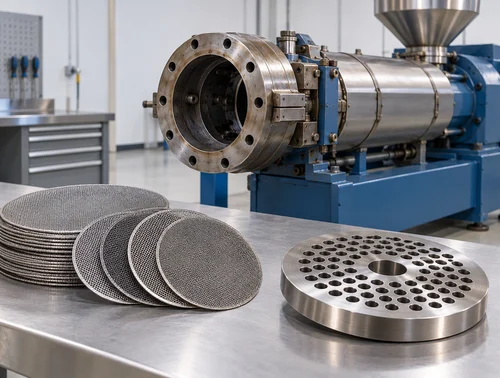
Die and screen pack
A partially blocked screen pack raises pressure and reduces output. If the machine has a screen changer, verify that the screens are the correct mesh and that they are being changed on schedule. A clogged screen is the most common cause of a sudden, unexplained output drop.
The die itself can cause uneven flow if its internal geometry is damaged or if it was designed for a different compound. Look for polished areas and dead spots that indicate flow separation.
Screw and drive wear
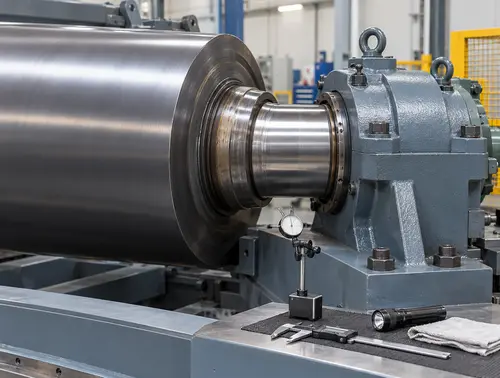
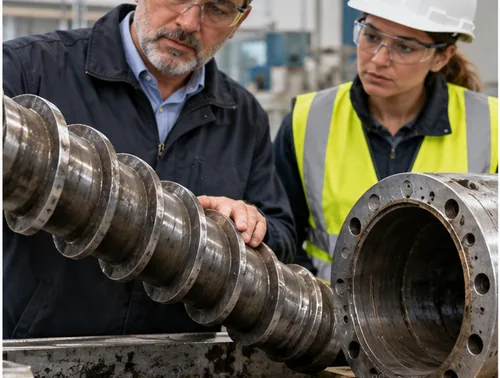
If feed, temperature, screen and die are all correct, look at clearance. A worn screw and barrel let material slip backwards, and the output becomes sensitive to every small change in back pressure. Measured clearance figures settle the question; visual inspection rarely does.
What to check before buying
Ask for a run at steady settings and watch the output for five minutes. Measure the variation, not just the average. If the machine surges on the stand, price the repair into the offer — or walk away.
Ask for the screen change history and the last screw measurement. Our notes on screw and barrel wear and filtration screen scope cover two of the four causes in detail.
Setting up a stable feed
Feed stability is the cheapest fix for surge and the one most often skipped. The compound arriving at the screw should be consistent in thickness, temperature and position. Any variation in those three is transferred directly to the output.
| Feed arrangement | Strength | Limitation | Best fit |
|---|---|---|---|
| Hand-fed strip | No equipment cost | Variable rate and temperature | Short runs, thick sections |
| Powered feed roller | Steady rate, less operator fatigue | Needs adjustment per compound | Most production lines |
| Gear pump or melt pump | Pressure stabilised before the die | Cost, cleaning, additional wear part | Tight tolerance, high value |
A gear pump does not fix a worn screw, but it does remove feed variation from the equation. If the machine surges even with a pump, the cause is upstream in the screw or barrel.
Evaluating an extruder? Vatsn Tecnic supplies new, used and refurbished rubber processing machinery. Ask for a steady-state output test with the inspection pack, and we will help you judge whether the surge is a feed issue or a worn machine.
To read More about Rubber Making Machine Visit Here:
https://www.indiamart.com/vatsntecnic/profile.html
Frequently asked questions
Is surge always a sign of a worn screw?
No. Feed inconsistency and temperature control cause more surge than wear. Check those first because they are cheaper to correct.
How do I measure output variation?
Weigh or measure the extrudate over fixed intervals at steady settings, then compare the spread rather than the average.
Can a die cause surge?
It can cause uneven flow and pressure variation, especially if it was designed for a different compound or has been damaged internally.
What does a clogged screen do?
It raises pressure and reduces output progressively. Change screens on a schedule rather than waiting for a drop in output.
Does temperature control affect output?
Yes. Viscosity changes with temperature, so an unstable zone produces an unstable output.
How do I check the screw?
Measure flight depth and clearance against the drawing. Visual inspection alone will not tell you whether wear is significant.
Can surge be tuned out?
Sometimes, by adjusting speed and temperature together, but that masks the cause. Fix the cause, then tune.
What should the seller demonstrate?
A steady run of several minutes with the output measured, not a short demonstration at whatever settings look best.