
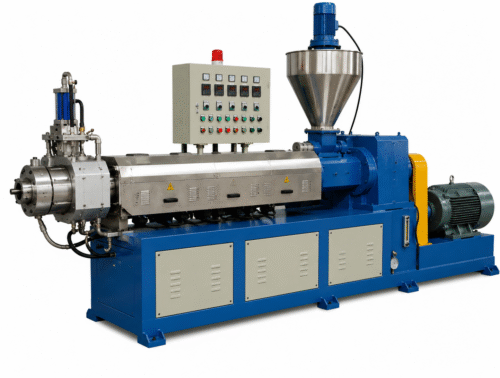
 Rubber Hot Feed Extruder
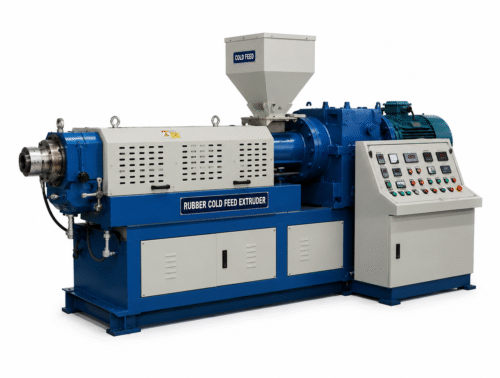 Rubber Cold Feed Extruder
 Rubber Strainer – Reclaim Extruder
 Reclaim Rotary Autoclave
 Compression Molding
 Injection Molding
 Vacuum Molding
 Rubber EVA Refiner Mill
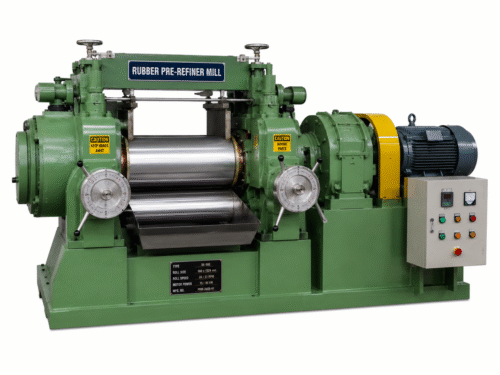 Rubber Pre-Refiner Mill
 Tire Building Machine
 Tread & sidewall Extruder
 Tread Cooling skiver
 Tire curing press
 BELT JOINTING PRESS
 Belt Building Machine
 Eva Footwear Injection Molding Machines
 Hawaii Slipper Sole Sheet Machine
 Eva Sole Sheet Splitting
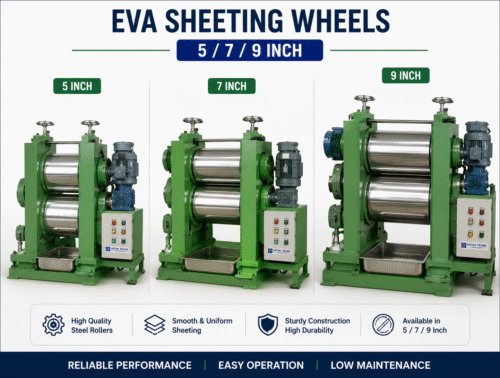 Eva Sheeting Wheels 5/7/9
 PVC Flooring Machine
 Plastic Pelletizing Line
 Filler / Masterbatch / PVC / TPR / EVA
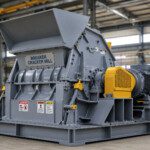 Breaker – Cracker Mill
 Shredder – Rasper Machines
 Waste Rubber Crumb Grinder Mill
Verified Rubber Dispersion Kneader in Mancheswar: Inspect Rotor and Chamber Wear


A verified rubber dispersion kneader in Mancheswar should be assessed through visible wear mapping, documented repair history and a trial that matches the intended compound as closely as practical. Rotor edges, chamber liners and working clearances interact. A single photograph or batch time claim cannot establish their condition, so the buyer needs evidence that explains what was inspected and what remains uncertain.
Images in this article are illustrative planning visuals. They do not prove the condition or availability of a specific machine.
How to evaluate verified rubber dispersion kneader in Mancheswar
Use the following checks to connect machine condition, inspection evidence and commercial responsibility without treating an unsupported claim as a verified fact.
Why wear location matters more than a broad condition label
Mixing surfaces do not wear uniformly. Feed zones, rotor tips, chamber corners, discharge areas and seal interfaces can show different patterns. The commercial question is not simply whether wear exists; it is whether the present geometry can support the buyer’s process or requires planned restoration. Inspection should document location, extent and previous build-up without inventing a service-life prediction.
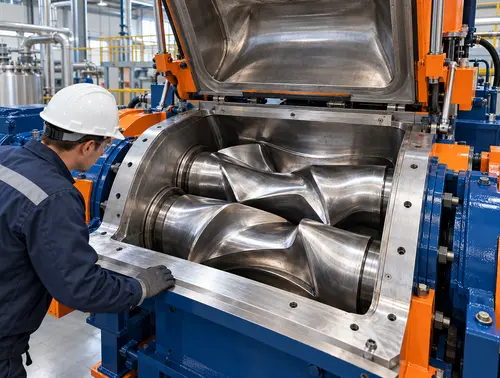
Create a machine-specific wear map
Start with photographs that use consistent orientation and identifiers. Mark each rotor, chamber side, end area and discharge surface on a simple diagram. Note polished areas, grooves, cracks, coating loss, weld build-up and contact marks. Clean only through an approved safe procedure so residue does not hide the surface or create exposure. If important zones cannot be seen, list them as unverified instead of assuming they are acceptable.
Ask for repair history that explains the surfaces
Request available invoices, work orders, welding or coating notes, rotor-balancing records and before-and-after photographs. A repaired surface is not automatically unsuitable, but its method and follow-up evidence matter. Confirm whether rotor tips, chamber liners, seals or bearings were handled together, and whether alignment or clearances were checked afterward. If records are missing, price and scope should reflect the additional uncertainty.
Treat clearance measurements as a controlled task
Clearance values are useful only when the machine position, measurement points, temperature, instrument and procedure are recorded. Do not compare an isolated value with an unsupported generic tolerance. Use manufacturer drawings when available or engage a competent specialist to interpret the result. Repeat the same measurement where possible to expose method variation. The record should show who measured, when, where and under what condition.
Design a trial that can reveal practical effects
Agree the compound, batch sequence, ingredient responsibility, ram and discharge observations, sampling points and evaluation method. A trial should record behaviour rather than promise performance: feeding, mixing response, temperature trend, leakage, discharge, sample appearance and unusual noise can be documented. If the seller cannot run the buyer’s material, state what substitute was used and which conclusions cannot be transferred.
Close the deal with defined restoration ownership
Separate cleaning, surface restoration, seal work, bearing investigation, alignment, controls and trial support in the quotation. State which party supplies materials and who approves the completed work. Retain photographs and sample labels with the final open-item register. A clear scope protects both parties because it prevents a broad ‘refurbished’ label from replacing specific evidence.
Compare the evidence before committing
| Evidence or route | Practical advantage | Limitation or trade-off |
|---|---|---|
| Rotor and chamber wear map | Shows location and visible extent | Remaining service life |
| Repair history | Explains previous restoration work | Current geometry without inspection |
| Recorded clearance check | Creates repeatable dimensional evidence | Process performance for every compound |
| Controlled trial | Shows behaviour under agreed conditions | Long-term reliability |
The comparison should be read with the offered machine’s actual access, records and intended duty. An unavailable item should be labelled unavailable rather than replaced with an assumption.
Choose a purchase scope that assigns risk
| Scope | Advantage | Trade-off |
|---|---|---|
| Buy for planned rebuild | Buyer controls restoration standard | More work after delivery |
| Seller restores defined areas | Clearer delivery scope | Completion criteria must be measurable |
| Trial before final payment | Links evidence to a decision gate | Material and access coordination required |
| Specialist inspection | Adds technical independence | Cost and inspection limits remain |
Whichever route is selected, acceptance should refer to named evidence, stated test conditions and an open-item register. This keeps commercial language aligned with what was actually verified.
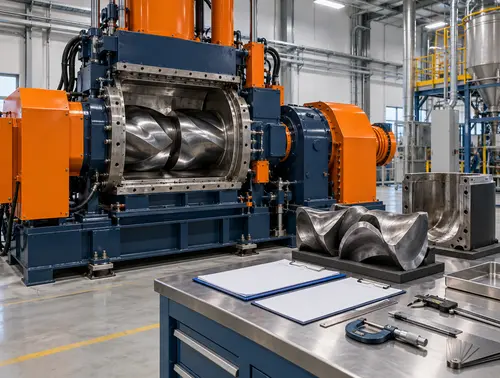
Practical buyer checklist
- Confirm the exact offered machine identity before using any record.
- Define safe access, isolation and witness responsibilities.
- Record instruments, locations, conditions and limitations.
- Separate visible condition from measured or documented condition.
- Assign every repair, exclusion and missing document to an owner.
- Retain dated photographs and the final accepted scope.
For related planning, review this Vatsn Tecnic buyer guide. Safe inspection and maintenance planning should follow competent procedures; the UK Health and Safety Executive provides general safe-maintenance guidance. These references support the method, but the offered machine still requires its own assessment.
Request a machine-specific review
Send Vatsn Tecnic the machine identity, intended product, available records, photographs and test constraints. The team can help organise the enquiry around observable evidence and a written scope. Avoid committing on photographs, a location label or an unsupported performance promise alone.
To read More about Rubber Making Machine Visit Here:
https://www.indiamart.com/vatsntecnic/profile.html
Buyer FAQs
Can photographs prove rotor clearances?
No. Photographs document visible condition; clearances require a defined measurement method and recorded locations.
Is hard-facing evidence always a concern?
No. It shows previous work. The buyer should understand the method, geometry, finish and verification performed afterward.
Should the chamber be cleaned before inspection?
Yes, when safely agreed. Residue can hide surfaces, but cleaning must follow isolation and exposure controls.
What if original drawings are unavailable?
Record the gap and use competent assessment, repeatable measurements and a clearly limited acceptance decision.
Can a substitute compound be used for trial?
It can demonstrate basic operation, but the report must state why its behaviour may not represent the buyer’s compound.
Which samples should be retained?
Retain clearly labelled samples from agreed batch stages when the buyer’s evaluation plan requires them.
How should cracks or deep grooves be handled?
Document their exact locations and obtain a competent repair assessment before assigning acceptance or cost.
What information should accompany an enquiry?
Send machine identity, rotor type if known, intended compounds, available wear photographs, repair records and trial constraints.
Conclusion
verified rubber dispersion kneader in Mancheswar enquiries should lead to a decision record that distinguishes verified facts, open questions and assigned corrective work. When the buyer defines evidence before price negotiation, the quotation becomes easier to compare and the destination team receives a more useful handover.