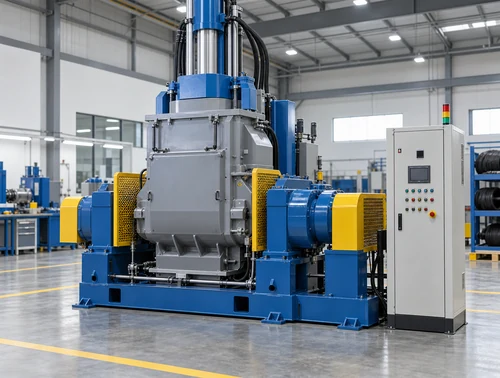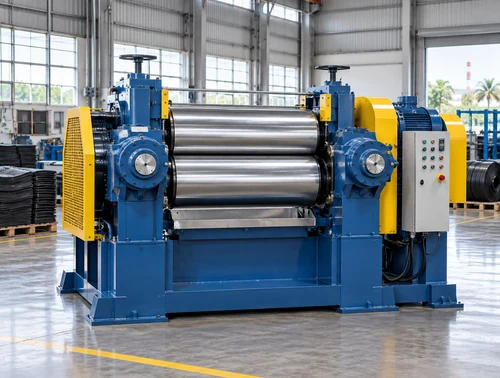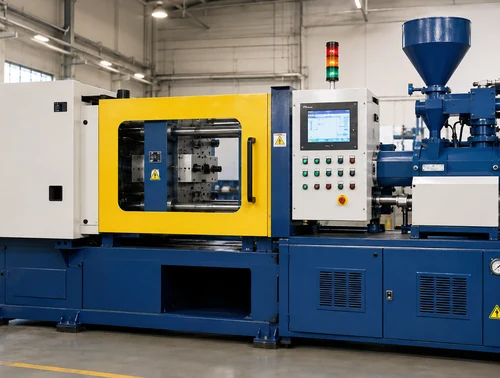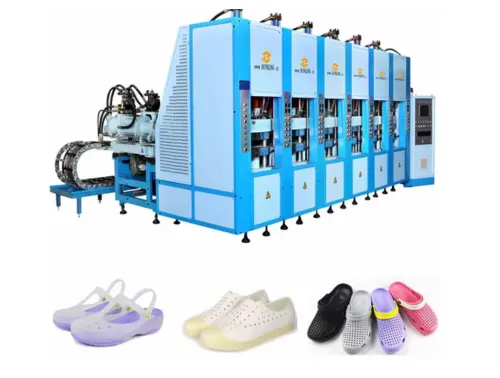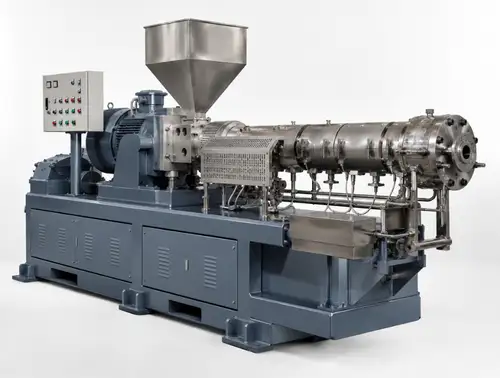
 Rubber Hot Feed Extruder
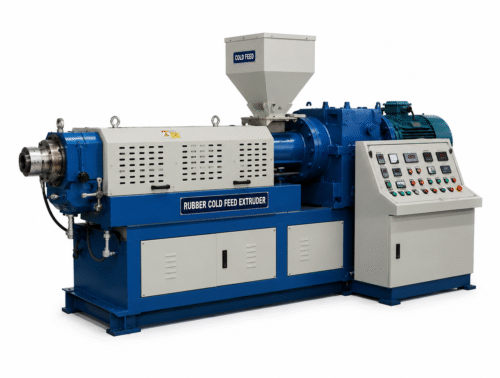 Rubber Cold Feed Extruder
 Rubber Strainer – Reclaim Extruder
 Reclaim Rotary Autoclave
 Compression Molding
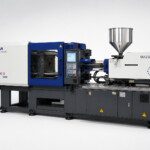 Injection Molding
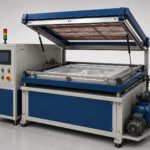 Vacuum Molding
 Rubber EVA Refiner Mill
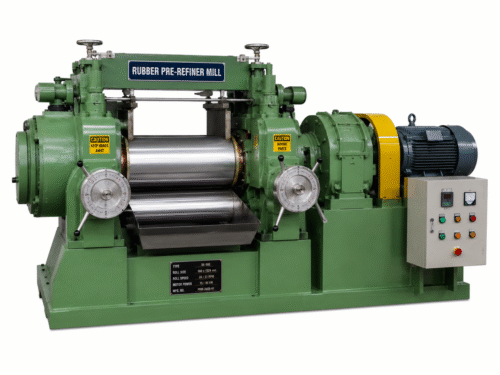 Rubber Pre-Refiner Mill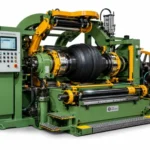
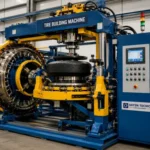 Tire Building Machine
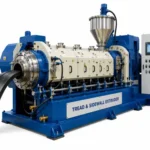 Tread & sidewall Extruder
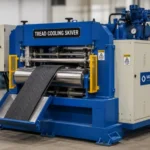 Tread Cooling skiver
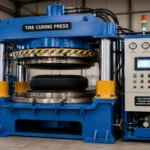 Tire curing press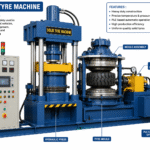
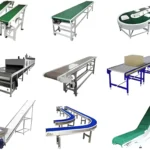
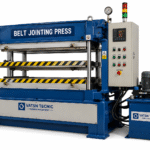 BELT JOINTING PRESS
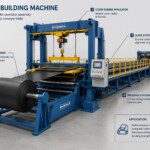 Belt Building Machine
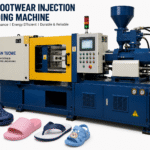 Eva Footwear Injection Molding Machines
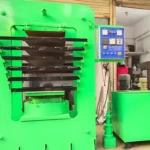 Hawaii Slipper Sole Sheet Machine
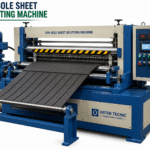 Eva Sole Sheet Splitting
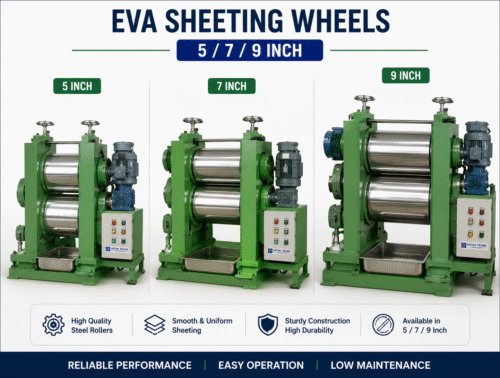 Eva Sheeting Wheels 5/7/9
 PVC Flooring Machine
 Plastic Pelletizing Line
 Filler / Masterbatch / PVC / TPR / EVA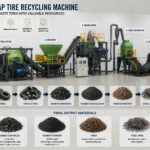
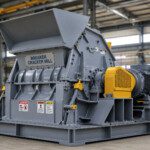 Breaker – Cracker Mill
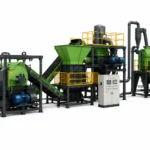 Shredder – Rasper Machines
 Waste Rubber Crumb Grinder Mill
Guide For Buying Dispersion Kneader in Raipur

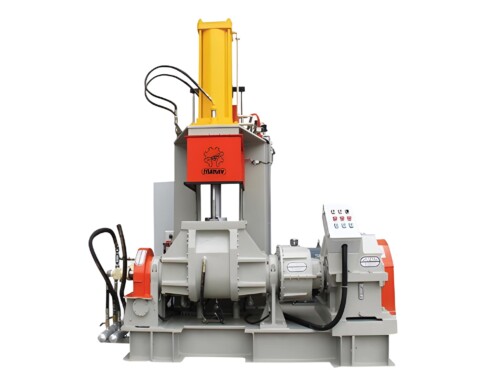
If you are planning to start or expand a rubber manufacturing unit in Raipur, one of the biggest decisions is buying the right Dispersion Kneader. Many factory owners focus only on the machine price, but later face problems like poor mixing quality, frequent breakdowns, high power consumption, or difficulty in getting spare parts.
In Raipur, where industries are growing rapidly in areas such as Urla, Siltara, and Bhanpuri, the demand for rubber processing machines has increased significantly. Whether you manufacture rubber sheets, footwear components, conveyor belts, automotive rubber parts, or reclaim rubber products, choosing the correct kneader can directly affect your production quality and operating cost.
This guide will help you understand what a Dispersion Kneader is, how it works, what to check before buying, and why many businesses in Raipur prefer used or refurbished machines instead of brand-new ones.
What is a Dispersion Kneader?
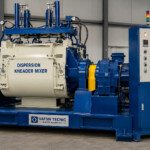
A Dispersion Kneader is a heavy-duty rubber mixing machine used to combine rubber, fillers, chemicals, oils, and other additives into a uniform compound. Think of it as the machine that prepares the “dough” for rubber products.
Unlike a simple mixing mill, a kneader works inside a closed chamber. Two specially designed rotors rotate at different speeds and generate high pressure and shear force. This helps in dispersing carbon black, silica, and other ingredients evenly throughout the rubber.
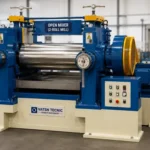
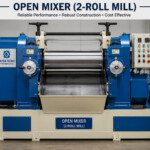
Many small and mid-scale factories prefer kneaders because they offer better consistency and faster mixing compared to traditional open mills.

How does it work in a real factory setup?
In practical production, the process is quite straightforward:
Rubber is fed into the mixing chamber through the top hopper.
Fillers and chemicals are added according to the formulation.
The rotors start rotating and generate heat through friction.
Pressure is applied using a ram or hydraulic system.
The materials are kneaded and dispersed until the required mixing quality is achieved.
The batch is discharged from the bottom chamber.
The compound is then sent to a mixing mill or further processing machine.
From industry experience, this is where many buyers make a mistake: they assume all kneaders give the same mixing quality. In reality, rotor condition, chamber wear, and temperature control have a huge impact on the final rubber compound.
Why invest in a Dispersion Kneader in Raipur
Raipur is not only known for steel and metal industries; rubber and polymer-related manufacturing is also growing steadily. A good kneader can offer several practical advantages:
Faster batch preparation
A kneader can complete mixing in less time than an open mill, which helps increase daily production capacity.
Better compound consistency
Uniform dispersion reduces defects in finished products such as bubbles, uneven hardness, or poor tensile strength.
Lower labor dependency
Since the process is more controlled, fewer manual adjustments are needed during mixing.
Improved productivity for continuous production
Factories running multiple batches per shift benefit from reduced downtime between mixes.
Suitable for various rubber products Dispersion Kneader in Raipur
It is commonly used in footwear, automotive parts, rubber rollers, cables, hoses, belts, and reclaim rubber applications.
What affects the price of a Dispersion Kneader?
The cost depends on several factors, and understanding these can help you compare machines more accurately.
Factor | Impact on Cost |
|---|---|
Machine capacity (35 L, 55 L, 75 L, 110 L, etc.) | Larger capacity usually costs more |
Main motor power | Higher HP increases price and power requirement |
Rotor type | Tangential and intermeshing designs differ in cost |
Hydraulic system condition | Affects performance and maintenance |
Gearbox and bearings | Critical for long-term reliability |
Control panel and automation level | Modern controls add to the cost |
Brand and country of origin | Imported machines may be priced differently |
Whether the machine is new, used, or refurbished | One of the biggest price factors |
A practical tip: do not compare machines only by capacity. A well-maintained 55 L kneader can often perform better than a poorly maintained 75 L machine.
Why many buyers choose used or refurbished machines
In Raipur, a large number of growing factories prefer used Dispersion Kneaders. The main reason is not just saving money; it is also about getting a machine that is available immediately.
Here are some practical advantages:
Lower initial investment – useful for expanding production without heavy capital expenditure.
Faster delivery – new machines may have long manufacturing lead times.
Tested performance – a running used machine can often be inspected under load.
Better value for money – especially when the gearbox, rotors, and hydraulic system have been properly refurbished.
However, this is also where buyers need to be careful. From machinery trading experience, the most expensive used machine is the one that looks cheap but requires major repairs after installation.
Industrial demand of Dispersion Kneader in Raipur
Raipur’s industrial ecosystem makes it a good market for rubber machinery. Common applications include:
Rubber sheet manufacturing
Footwear and EVA-related products
Conveyor belt components
Automotive rubber parts
Reclaim rubber processing
Cable and hose compounds
Tyre retreading materials
Areas such as Siltara Industrial Area, Urla Industrial Area, and Bhanpuri have many engineering and processing units where demand for secondhand and refurbished machinery remains strong.
Buying checklist: what to inspect before finalizing
If you are serious about Buying Dispersion Kneader, take this checklist with you during inspection.
Mechanical condition
Check rotor wear and clearance.
Inspect the mixing chamber for cracks or excessive wear.
Rotate the shafts manually if possible.
Listen for abnormal gearbox noise.
Hydraulic system
Check for oil leakage.
Test ram movement.
Verify hydraulic pressure.
Electrical system
Confirm motor rating and RPM.
Inspect the control panel.
Check safety interlocks.
Ensure proper earthing and wiring condition.
Production suitability
Match batch size with your daily requirement.
Confirm power availability in your factory.
Check whether spare parts are easily available in India.
Documentation
Machine serial number
Previous maintenance records
Motor and gearbox details
Trial or inspection report if available
One important recommendation: always ask for a trial run. Seeing the machine in operation is far more valuable than checking only photos or videos.
Common mistakes buyers make Dispersion Kneader in Raipur
Here are a few mistakes that repeatedly occur in the used machinery market:
Buying a machine that is too large for the actual production requirement.
Ignoring power consumption and focusing only on purchase price.
Not checking rotor condition, which is one of the costliest parts to repair.
Choosing a machine without confirming spare part availability.
Skipping installation planning, such as foundation, cooling water, and electrical load.
In many cases, buyers spend less on the machine but end up spending much more on repairs, rewinding, or gearbox replacement.
Frequently Asked Questions
Is a used Dispersion Kneader reliable?
Yes, if it has been properly inspected and refurbished. Pay special attention to the rotors, gearbox, bearings, and hydraulic system.
Which capacity is suitable for a small rubber unit?
For many small and mid-scale units, 35 L to 55 L is a practical starting range. The right size depends on your batch weight and daily production target.
Can I use a Dispersion Kneader for reclaim rubber?
Yes. It is commonly used for reclaim rubber, rubber compounds, footwear materials, and other rubber processing applications.
What is the most important part to inspect in a used kneader?
From practical experience, the rotor and gearbox condition are the most critical. Repairs in these areas can be expensive and may cause long production delays.
Final thoughts
Buying a Dispersion Kneader in Raipur is not just about finding the lowest price. The right machine should match your production volume, power availability, and long-term maintenance capability.
If you are considering a used or refurbished Dispersion Kneader, spend time on inspection, ask for a trial run, and verify the condition of the rotors and gearbox. A carefully selected machine can serve reliably for many years and help you expand production without unnecessary downtime.
For businesses in Raipur’s growing industrial areas, a well-maintained Dispersion Kneader is often one of the most practical investments for improving rubber compound quality and increasing manufacturing efficiency.
https://www.indiamart.com/vatsntecnic/profile.html
To read More about Footwear Machine Visit Here